
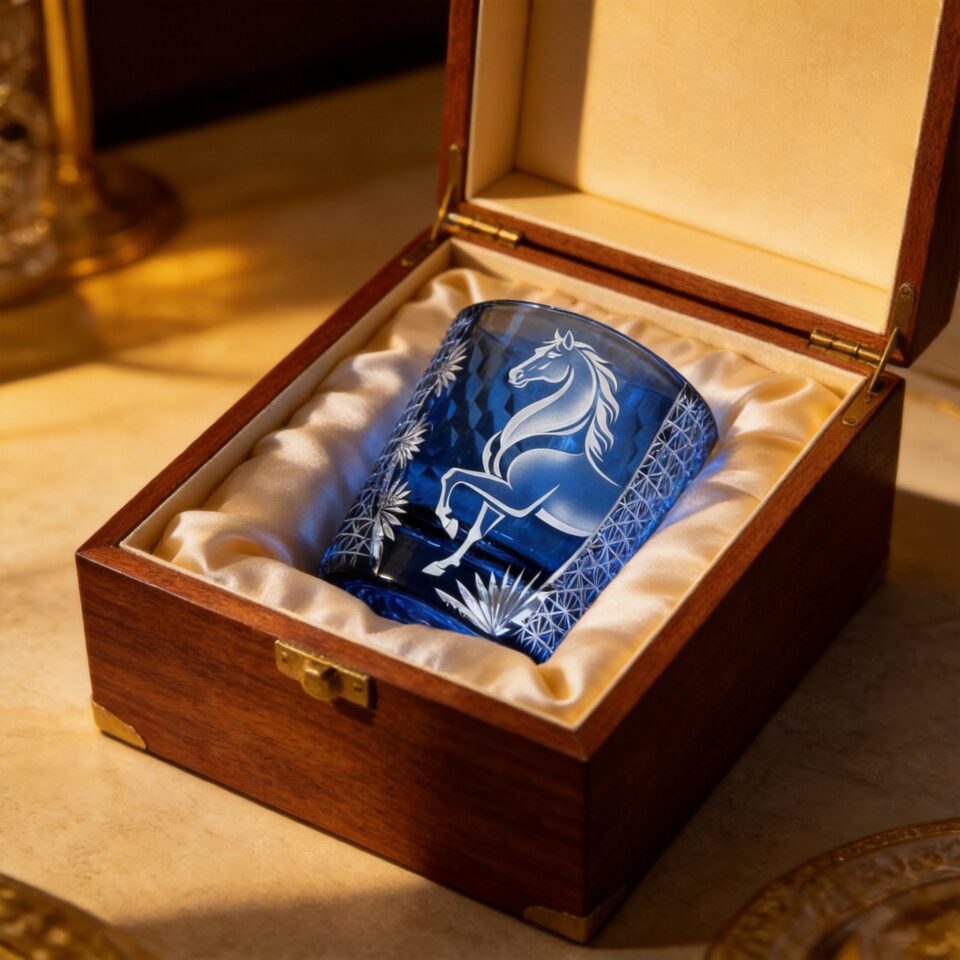
The luxury whiskey glass market is crowded — heritage brands, handcrafted artisans, tasting specialists, and a wall of “premium” listings that are premium only in price. The published comparisons help, but they bury the decision-relevant question: what actually separates true luxury crystal from expensive ordinary glass? Four things — and knowing them turns any roundup into a usable shortlist.
1. Weight and feel: the first luxury tell
Reviews of the best crystal whiskey glasses keep landing on the same objective marker: heft. Sets praised for a premium feel measure roughly two-thirds heavier than an average rocks glass — a difference you feel the moment you pick one up. Weight is not decoration; it signals wall thickness, balance, and finishing time. When you shop remotely and cannot hold the glass, look for published weight in the listing — its absence is information too. Our guide to weight, balance, rim, and grip breaks down what “good” feels like concretely.
2. The sommelier pairing: two glasses beat one compromise
Sommelier guides converge on a versatile two-glass setup for serious whiskey drinking: a nosing classic for tasting alongside a premium rocks option for everyday sipping. The pairing logic is simple — concentration for aroma, room for ice — and trying to make one glass do both jobs is where most single-glass purchases disappoint. A luxury cabinet is built as a pairing, not a monolith.
3. Honest trade-offs: handcraft has a cost profile
Luxury handcrafted crystal makes real trade-offs that premium marketing skips: hand-wash-only care, more fragility than barware, and capacity surprises in designer shapes. None of these disqualify a set — they define where it belongs. Handcrafted, double-thick artisan pieces shine as collectible craft for deliberate pours; machine-made tasting specialists win for groups and daily rotation. Matching the trade-off to your routine is the difference between a luxury glass that gets used and one that gets protected from use.
4. Provenance: handcraft is the differentiator
Brand-roundup sameness is the luxury market’s biggest weakness — five near-identical listicles cycling the same heritage names. What stands apart is provenance: handcrafted, hand-cut crystal where each glass is a distinct piece, American or European craft traditions, and makers who document how the glass was made. Community consensus threads on buy-it-for-life forums consistently prize exactly this — glassware with a verifiable making story over anonymous premium pricing. For the material side of provenance, our crystal authentication guide covers what to verify.
The luxury tier ladder
- Everyday premium: durable, dishwasher-safe crystal for daily rotation — luxury feel without fragility.
- Deliberate sipping: handcrafted double-thick pieces for the weekend pour — hand-wash care expected.
- Collectible craft: hand-cut artisan crystal where each glass is unique — provenance documented, display-worthy.
- Tasting specialist: nosing shapes kept alongside the sipping glasses — the sommelier pairing completed.
Verify before you buy
Whatever the tier, the verification checklist is constant: published weight, honest material naming (lead-free crystal over vague “crystal-look”), documented making process, and real review depth beyond star averages. Vague listings that skip all four are premium-priced ordinary glass: the six tests settle it before checkout.
The bottom line
True luxury whiskey glass is not the most expensive listing — it is weight you can feel, a pairing that covers tasting and sipping, trade-offs stated honestly, and provenance you can verify. That standard — hand-cut lead-free crystal, real heft, documented craft — is what every Cristamor piece is made to. Browse the Cristamor collection for the artisan lane the brand roundups skip, and if the purchase is a gift, our premium gift selection guide matches the tier to the occasion.