
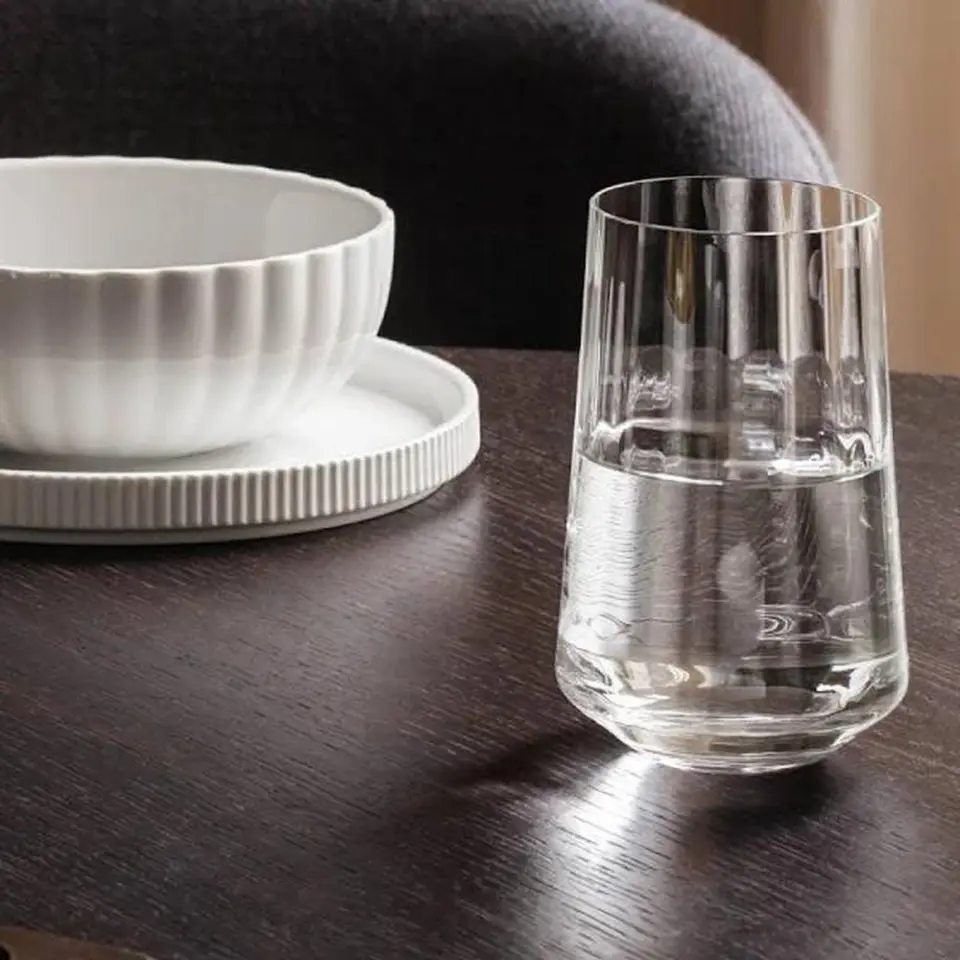
Set a tulip tasting glass next to a classic rocks tumbler and the wide opening can look like a design mistake — all that aroma escaping? But the wide-mouth whiskey glass is not a failed tasting glass. It is a different tool entirely, with a working heritage, an ice problem to solve, and a deliberate aroma philosophy. Here is why whiskey glasses have wide openings — and why that wide mouth is exactly the point.
It Started as a Working Glass
The wide-mouth whiskey glass descends from the Old Fashioned — a cocktail that is built in the glass, not shaken elsewhere. That construction dictated the shape: a wide mouth gives you room to muddle sugar and bitters right in the glass, to stir without slopping over, to layer ingredients, and to fit a citrus peel or cherry without a fight. The heavy base exists for the muddler’s pressure. A narrow tasting glass physically cannot do this job — the wide opening is the feature that makes the glass a workspace.
The Ice Geometry Problem
The wide format also solves a modern problem: big ice. A large-format cube or sphere — the standard for slow-dilution whiskey pours — needs room to sit without crowding the liquid, and a wide, short glass gives it that room while keeping the melt manageable. Narrow tasting glasses simply cannot take a 2-inch cube. If your whiskey habit includes rocks pours, the wide opening is not negotiable; it is the shape the drink requires.
The Aroma Trade-off: Dispersal by Design
Yes — a wide rim lets aroma disperse into the air instead of funneling it to your nose. For evaluation, that is a loss. For everyday drinking, it is often the point: a softer nose, a gentler alcohol hit, a glass you can hold through a long conversation without intensifying everything. Small-diameter rims concentrate scent; wide-diameter rims deliberately release it. The wide opening trades nosing intensity for drinking comfort — a design choice, not an oversight.
There is one edge to respect: a wide bowl lets whiskey breathe, which opens flavors up — but a glass that is too wide accelerates oxidation, which bonds with aroma esters over a long evening. Wide is functional; extremely wide works against you on a slow sip.
The Names Tell the Story
The same glass carries three names, each explaining the wide shape from a different angle: the old fashioned glass (named for the cocktail built in it), the rocks glass (named for serving whiskey over ice), and the lowball. As serves grew, the double old fashioned arrived with 12-14 ounce capacity for bigger ice and builds — the wide format evolving with how people actually drink. Three names, one working silhouette.
So Is Your Wide Tumbler Wrong?
No — it is matched to a different job. The honest framework:
- Building cocktails, big ice, casual sipping → wide-mouth tumbler. This is what it was designed for.
- Evaluating aromas, comparing pours, nosing practice → narrow-rim tasting glass.
- Most collectors and drinkers → one of each, chosen for different evenings.
For the full comparison between the two silhouettes, our Glencairn vs tumbler guide maps them to drinking styles, and the rim mechanism guide covers exactly how the opening changes aroma and palate delivery.
What Separates a Good Wide-Format Glass
Wide-format glasses range from disposable barware to heirloom crystal, and the difference is legible in the hand: a planted, weighted base that stands up to a muddler and balances the wide bowl; hand-cut facets that catch light across the broad face; and lead-free crystal for anything you actually drink from. Our hand-feel anatomy guide breaks down why that planted base matters so much in wide formats specifically.
The Cristamor Take
Cristamor’s wide-format whiskey glasses are the working-glass tradition executed in hand-cut lead-free crystal: the wide mouth that built the Old Fashioned, the planted heavy base that earns its keep, and facet cuts that make the broad face worth displaying. Wide where the work is, refined where the hand lands. Explore the Cristamor collection — wide-format crystal glasses designed for whiskey as it is actually drunk.