
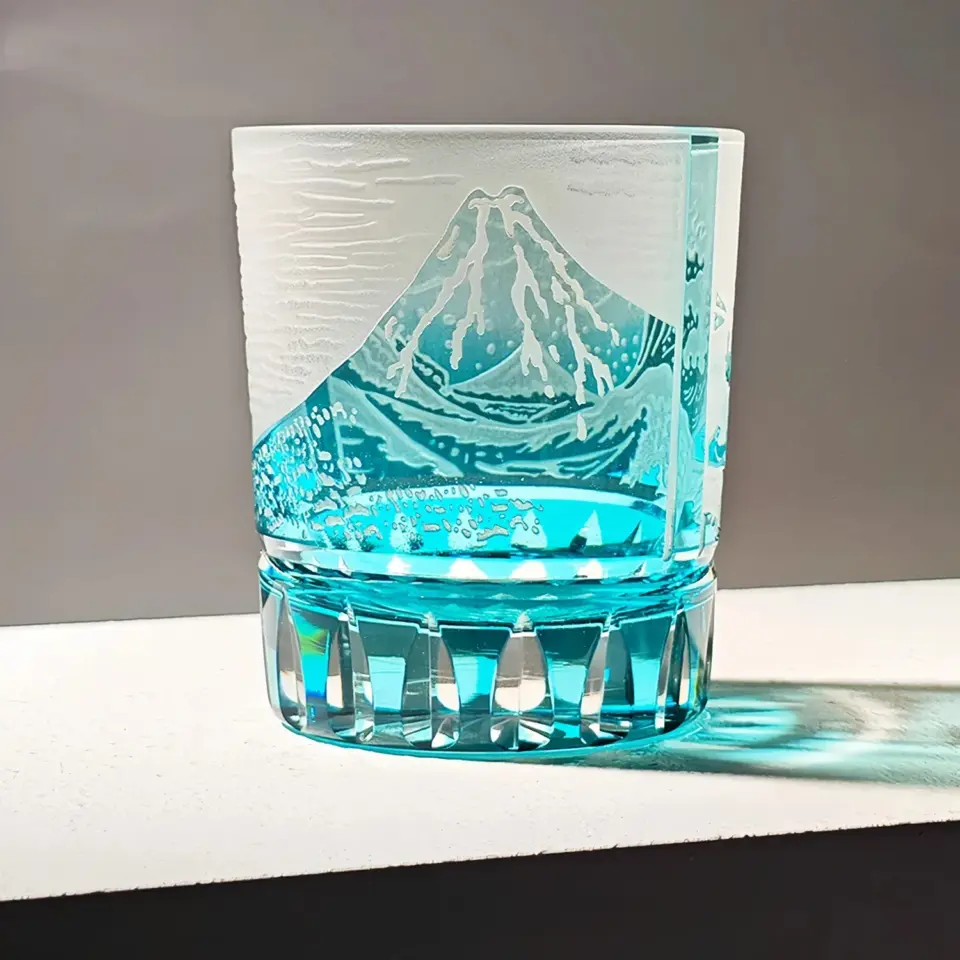
Pour the same whiskey into a Glencairn and a rocks glass, and the nose tells a different story. The reason isn’t magic — it’s physics. Volatile aroma compounds evaporate from the liquid surface and either concentrate toward your nose or disperse into the room, depending on the rim geometry. Here’s the mechanism, the glass formats that matter, and how to choose the right one for how you drink.
The Volatile Compound Mechanism
Whiskey’s aroma comes from volatile compounds — esters, aldehydes, and phenols — that evaporate from the liquid surface. When you pour whiskey into a glass, these compounds escape and either pool near the rim (narrow opening) or scatter into the air (wide opening). A glass with a wide bowl and a narrow rim traps these compounds, funnelling them toward your nose as you sip. This is why the same whiskey can smell intensely of fruit and spice in a Glencairn but seem flat in a wide tumbler.
The Glencairn Effect: Tulip Shape as Aroma Concentrator
The Glencairn glass — wide bowl tapering to a narrow rim — is widely regarded as the gold standard for whiskey nosing. Its tulip silhouette concentrates aromas, making them easier to detect and identify. The shorter, more solid base (compared to a stemmed copita) makes it robust enough for regular use while maintaining the same aroma-focusing geometry. For anyone starting to explore whiskey nosing, the Glencairn format is the most accessible entry point.
Oxygen Interaction: Why Flavors Evolve Over Time
Glass shape also controls oxygen exposure. A wider bowl provides more surface area for the spirit to interact with air, allowing some harsher alcohol vapours to evaporate and the whiskey’s flavours to open up over time. This is why the same whiskey can taste different five or ten minutes after pouring — the oxygen interaction evolves the flavour profile. A narrow-rim glass slows this process, preserving the initial aromatic intensity longer.
The Copita Tradition: A Stemmed Alternative
The copita — a traditional stemmed tasting glass with a tulip-shaped bowl — offers the same aroma-concentrating benefits as the Glencairn with an added advantage: the stem keeps your hand away from the bowl, preventing body heat from warming the whiskey. This matters for careful nosing where temperature control affects which volatile compounds are released. The copita is the traditional choice in Scottish whisky tasting circles.
The ABV Trade-off: When Narrow Rims Intensify Burn
Here is a nuance most guides miss: a narrow rim that concentrates pleasant aromas also concentrates alcohol vapour. For whiskeys above moderate ABV, this intensifies the burning sensation and can mask the subtler notes you’re trying to detect. The Council of Whiskey Masters specifically warns that cognac-style over-concentration masks the delicate flavours of a good whiskey. If you’re nosing a high-proof pour, a slightly wider rim lets the harsher ethanol fraction dissipate while preserving the more pleasant aromatic compounds.
Beyond Smell: Palate Delivery
The rim doesn’t just shape what you smell — it shapes how the whiskey flows over your palate. Different rim geometries guide the liquid across different parts of the tongue, influencing the perception of sweetness, bitterness, and texture. This is a distinct dimension from nosing, and it’s why two glasses with identical aroma properties can still deliver different tasting experiences.
Matching Glass to Whiskey Style
- Standard ABV (40-46%) → narrow-rim tasting glass (Glencairn, copita) for full aroma concentration.
- Higher ABV / cask strength → slightly wider rim to let harsher vapours escape while preserving the nose.
- Casual sipping / rocks pours → wide-rim tumbler; relaxed aroma is the goal.
- Comparative tasting → matched tasting glasses for consistent nosing across samples.
For a deeper dive into rim geometry and the wide-vs-narrow trade-off, our rim mechanism guide covers the science in detail. And for the material angle — how lead-free crystal affects both aroma neutrality and durability — see our optical vs lead crystal guide.
The Cristamor Take
Cristamor’s hand-cut lead-free crystal whiskey glasses are designed with the same aroma-concentrating principles that make tasting glasses effective — precision-finished rims, wide bowls for swirling, and lead-free K9 optical crystal that adds no off-flavours of its own. If you’re choosing a glass format, our Glencairn vs tumbler comparison maps the options. Explore the Cristamor collection — crystal glasses engineered for the nose as much as the hand.