
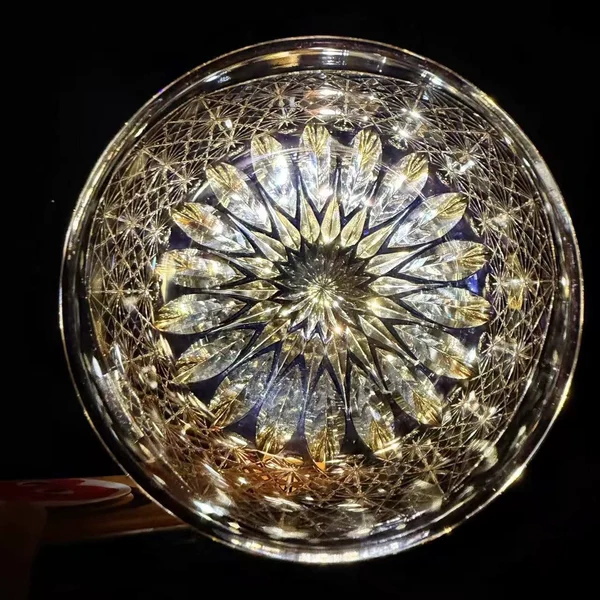
You pull your crystal whiskey glasses out for guests and the light hits wrong — a milky film dulls what should be glittering. Before you reach for anything under the sink, understand this: the fix depends entirely on which kind of cloudiness you have. One kind reverses completely. The other is permanent. Treating the wrong one with the wrong method can make it worse.
This guide is diagnose-then-treat: first a two-minute test to identify your haze, then the graduated restoration ladder for the reversible kind, and the drying discipline that keeps it from coming back.
Step 1: The Diagnosis — Mineral Haze or Etching?
Cloudy crystal comes in two flavors, and the treatment differs completely:
- Mineral-deposit haze (hard-water film): calcium and magnesium left behind when hard water dries on the surface. The vast majority of household cloudy glassware is this kind — and it’s fully reversible with household acids and gentle abrasives.
- Etching: microscopic physical damage to the glass surface from harsh detergents, very hot water, or prolonged chemical exposure. Light refracts unpredictably through these microscopic pits — and etched glass cannot be fixed, because there’s nothing left to dissolve. Etching requires prevention, not correction.
The two-minute test: run a fingernail gently across the haze. Mineral film sits on top of the glass — it feels slightly rough or chalky, and a vinegar-soaked corner will begin dissolving it within minutes. Etching feels smooth like the rest of the glass — the cloudiness lives inside the damaged surface, and no amount of soaking changes it. When in doubt — especially with antique, hand-blown, or leaded crystal — test any treatment on a small spot first.
Step 2: The Graduated Treatment Ladder (For Mineral Haze)
Start gentle and escalate only as needed — aggressive first attempts risk turning reversible haze into permanent damage.
Rung 1: The Warm Vinegar Soak
Vinegar’s acidity dissolves the calcium and magnesium minerals directly. Soak the glasses in a 50/50 white vinegar and warm water solution — for heavy spots, warm (not boiling) the vinegar before soaking. Fifteen minutes is usually enough. Rinse thoroughly with warm water afterward.
Rung 2: The Salt-and-Vinegar Paste
For film that survives soaking: mix about half a tablespoon of salt with white vinegar into a paste, rub it on with a soft cloth, let it sit for about ten minutes, then work the film off lightly with a soft bottle brush. The salt adds just enough abrasion; the vinegar does the dissolving.
Rung 3: The Baking-Soda Dab — Gentle, Cold, Brief
Stubborn spots still hanging on? Dab a little baking soda on your fingertip and rub the spot gently. Two cautions from the care literature: keep the paste and water cold to lukewarm — heat activates baking soda into a stronger alkali — and don’t leave it working for long periods. Brief, gentle, targeted.
Step 3: The Drying Discipline — Where Most Restorations Fail
Here’s the part that decides whether your work lasts a week or a year: hard-water haze returns if tap water dries on the glass again. The minerals are in the water, not the glass.
- Rinse with warm water, then dry immediately and thoroughly with a clean microfiber or lint-free cloth.
- Never let crystal air-dry — the drying film is what deposits the minerals in the first place.
- Lint-free matters: towel fibers can introduce micro-scratches that give future haze something to cling to.
The Lead-Crystal Warning: Gentler Than You Think
If your glasses are older lead crystal, add a layer of caution: lead crystal is more porous than ordinary glass and etches more easily from harsh detergents or prolonged heat exposure. That means shorter soaks, milder detergents, no dishwasher ever, and no aggressive scrubbing — the same treatment that restores a modern tumbler can haze a delicate antique further. The vintage lead-leaching question is its own topic; treat the surface gently first.
Prevention: The Two Habits That Keep Crystal Clear
- Hand-wash with mild detergent and lukewarm water — dishwasher detergents and heat are the primary etching causes.
- Dry immediately, by hand, with microfiber — never let hard water air-dry on the surface.
When Restoration Isn’t Enough: The Material Argument
If your glasses are etched beyond recovery, or you’re tired of managing delicate glassware, there’s a materials answer: lead-free crystal resists etching better than porous lead crystal while delivering the ring, clarity and thin rims that make tasting glasses worthwhile. You can verify what you’re holding with six simple crystal-vs-glass tests, and understand the material science in our optical vs lead crystal comparison.
Daily care is the other half — our gentle cleaning guide that prevents cloudiness covers the routine that keeps crystal clear from day one, and the dishwasher question gets its own material-specific answer.
Or skip the restoration cycle entirely: browse Cristamor’s lead-free hand-cut crystal whiskey glasses — made to stay clear with ordinary gentle care.
Conclusion: Diagnose First, Then Restore Gently
Cloudy crystal is usually a solvable problem — most household haze is mineral film that dissolves under a graduated vinegar-and-paste routine, finished with immediate microfiber drying. The irreversible version, etching, announces itself by feeling smooth under a fingernail and ignoring every soak. Diagnose before you treat, escalate gently, dry immediately — and if the haze turns out to be permanent, the material you buy next is the fix that lasts.