
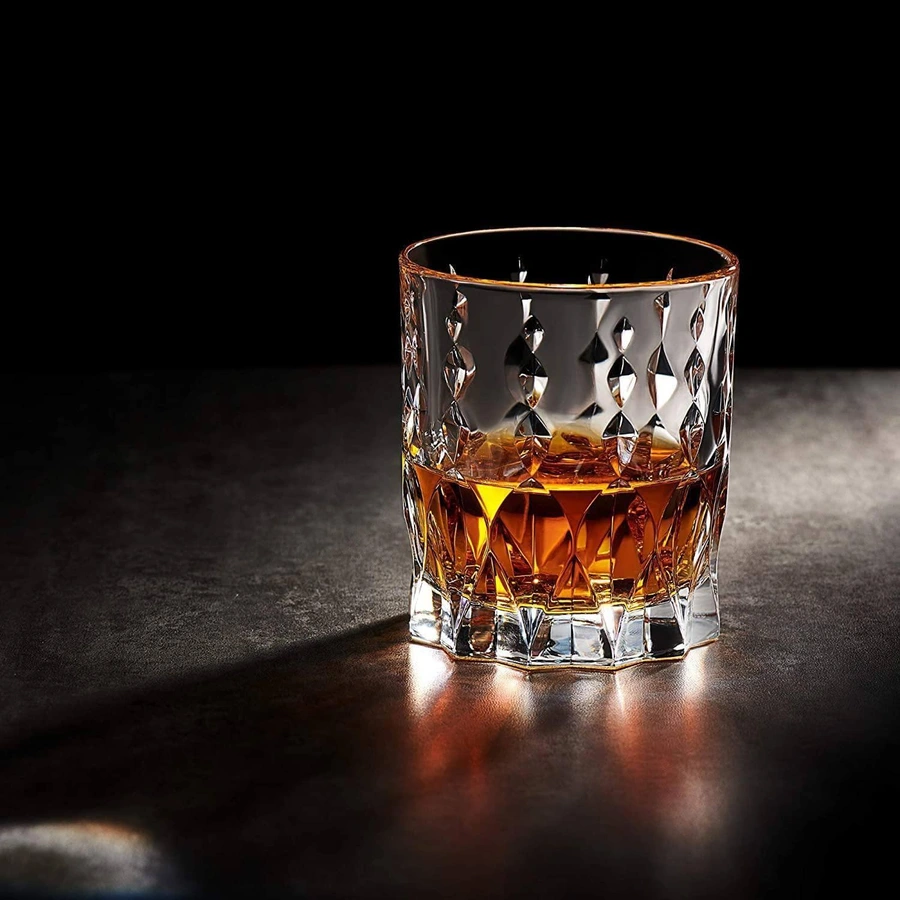
Crystal whiskey glasses look similar on the shelf. Under the surface, though, there are two very different materials — traditional lead crystal and modern lead-free (optical) crystal — and the difference affects clarity, how long the glass stays beautiful, whether it can survive the dishwasher, and how you should think about safety. This guide explains both materials in plain terms, so you can choose the right crystal whiskey glass for daily pours, gifting, or a personalized engraved set.
What Is Optical Crystal?
Optical crystal is a lead-free glass formulation prized for its exceptional clarity. Manufacturers produce it in thick sheets under controlled pressure so the finished material is free of bubbles, flow lines, and distortion — one industry glossary describes optical crystal as 100% lead-free and extremely hard. Because it contains no minerals that tint the glass, it is translucent, colorless, and notably clear.
Modern lead-free crystal typically replaces lead oxide with minerals like barium or zinc, delivering clarity and sparkle similar to traditional crystal without the health questions that come with lead. You will also see branded formulations such as Tritan crystal, which was engineered specifically for durability and is widely used in restaurant glassware.
What Is Lead Crystal?
Lead crystal is glass that contains lead oxide. Historically, adding lead made glass softer and easier to cut, gave it satisfying weight in the hand, and produced the long “ring” sound crystal is famous for. That is why vintage decanters and heirloom tumblers are usually leaded — it was the premium material of its era, and it still carries a certain romance.
The trade-off is a softer surface. Lead softens the glass structure, which makes it easier for artisans to cut intricate patterns, but it also means leaded crystal chips and clouds more readily over time than its lead-free counterpart.
Clarity: Which Crystal Is Clearer?
Both materials are clear, but optical (lead-free) crystal has an edge. Because it contains no tinting minerals and is manufactured to be free of internal distortion, optical crystal is often described as clearer than lead crystal. For a whiskey drinker, that matters more than it sounds: when you are judging color — deep amber bourbon versus pale gold single malt — a neutral, colorless glass shows you what is actually in the bottle.
Quality also affects clarity over time. Premium crystal maintains its brilliance for decades, while lower-grade material can turn cloudy or develop surface scratches. The material you choose determines how your glasses look in year five, not just on day one.
Hardness and Durability: The Real-World Difference
This is where modern formulations pull ahead. Lead-free crystal is generally harder and more scratch-resistant than leaded crystal. In practical terms, that means it resists chipping at the rim, shrugs off minor scratches, and tolerates dishwasher heat and detergent — while old lead crystal clouds under exactly that treatment because its softer surface etches.
If you drink whiskey regularly — a rocks glass a few nights a week, glasses in and out of the sink — durability is not a luxury. A dishwasher-safe crystal tumbler is a glass you will actually use every day; a hand-wash-only heirloom is one you will hide in a cabinet.
Quick comparison
| Feature | Optical / Lead-Free Crystal | Lead Crystal |
|---|---|---|
| Lead content | None (barium/zinc formulations) | Contains lead oxide |
| Clarity | Colorless, very clear | Clear, slightly more refractive sparkle |
| Hardness | Harder, scratch-resistant | Softer surface |
| Chipping / clouding | Resists both | More prone over time |
| Dishwasher | Generally tolerated | Not recommended (clouds) |
| Weight and ring | Lighter | Heavier, resonant ring |
| Long-term storage of spirits | Safe | Not recommended |
The Lead Question: Serving vs Storing
Here is the distinction most buyers miss — and the one that matters most for whiskey lovers. The risk with lead crystal is not the glass itself; it is time and contact. Health sources note there is no known safe level of lead exposure, and acidic liquids like alcohol increase how much lead can leach from leaded glass.
Serving a dram that you will finish in twenty minutes? The contact time is short, and community consensus — including long-running discussions among whiskey and cocktail enthusiasts — is that occasional drinking from lead crystal tumblers carries very low risk for adults. Storing whiskey is a different story: research has confirmed measurable lead leaching when spirits sit in lead crystal decanters for weeks or months, with concentrations that can reach many times accepted limits. Whiskey should never live long-term in a leaded decanter.
The practical rule is simple: drink from whatever you enjoy, but if you own leaded crystal, treat it as serveware — and move anything you age or store into lead-free glass.
So Which One Should You Buy?
- Buy optical / lead-free crystal if your glasses will see daily use, go in the dishwasher, hold whiskey for more than a few minutes, or travel to parties. It matches lead crystal on clarity, wins on durability, and removes the storage concern entirely.
- Choose lead crystal only if you specifically want the traditional heft and ring for occasional, careful serving — and you understand it needs hand-washing and gentle handling.
- For gifts, lead-free is the safer default: it suits recipients who will actually use the glass, and it is what virtually every major engraving and personalization studio now works with.
Engraving and Personalized Gifts
If you are commissioning engraved whiskey glasses — a monogram, a date, a company logo — the material choice is mostly made for you: personalization vendors overwhelmingly use lead-free crystal, precisely laser-engraving or deep sand-carving designs for a crisp, permanent frosted finish. It is a durable, food-safe canvas for a gift that gets used rather than shelved.
Cristamor’s hand-cut crystal whiskey glasses are designed for exactly this: made from lead-free crystal, finished by hand, and personalizable for weddings, milestones, and gifting. If you are comparing glass styles first, our guide to the best whiskey glass for men breaks down shapes and use cases, and our luxury whisky gift guide covers handcrafted presentation sets.
The Bottom Line
Optical (lead-free) crystal and lead crystal are both genuine crystal-quality glassware — but they are built for different lives. Lead crystal offers tradition, weight, and ring; lead-free optical crystal offers equal clarity with better hardness, chip resistance, dishwasher tolerance, and none of the storage worries. For whiskey glasses that get poured into, washed often, engraved, and given as gifts, lead-free is the modern standard. Explore the Cristamor collection to find hand-cut, lead-free crystal whiskey glasses made for daily rituals and milestone gifts alike — and if you are considering a leaded decanter for storing spirits, read our lead-free crystal decanter buyer’s guide first.