
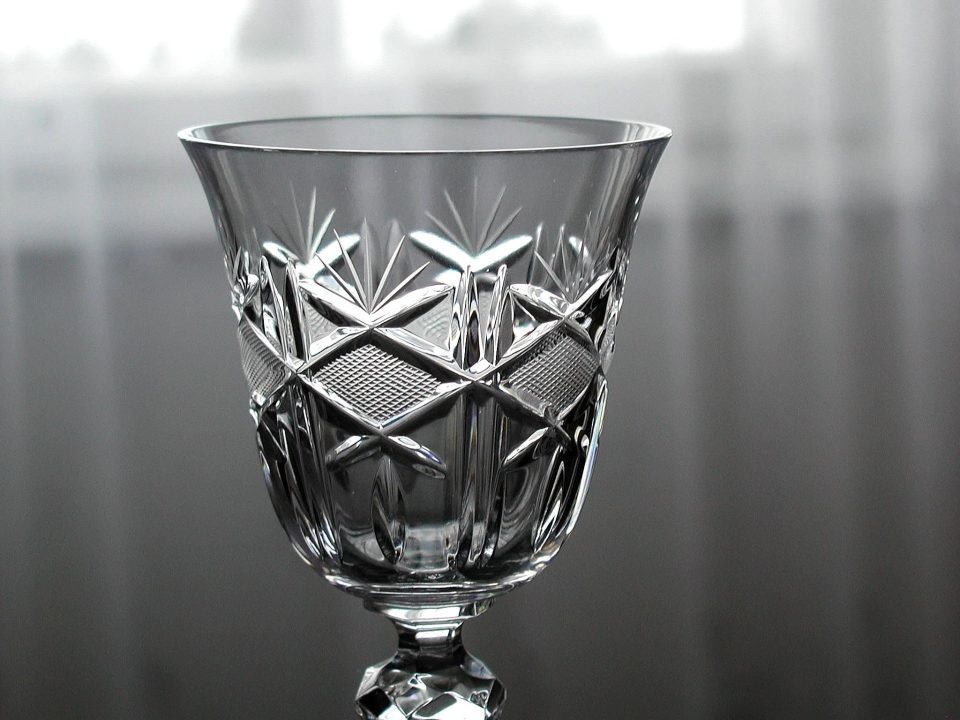
“Hand-cut crystal” might be the most abused phrase in drinkware. It shows up on $12 tumblers, on listings that ship from three different continents, and on “artisan” brands that appeared last Tuesday. The uncomfortable truth: a large share of what’s sold online as hand-cut crystal is neither hand-cut nor crystal — it’s factory-molded glass wearing the vocabulary of craft.
This guide gives you two sets of tools: five physical tests you can run in a store (or on a piece you already own), and five red flags that expose white-label products before you spend a cent.
First, Know What You’re Actually Looking At
Three completely different products are sold under one name:
- Molded glass. Molten glass is pressed into a mold that imitates facets. Production time: seconds per piece. The “cut” pattern is actually cast — soft-edged and identical on every unit.
- Machine-cut glass. Automated cutting wheels produce real facets, but every piece is a clone with ruler-perfect repetition.
- Hand-cut crystal. An artisan guides a rotating cutting wheel across each blank, facet by facet. It takes hours per piece, and it requires optical-grade material — because you can’t cut crisp facets into soft, bubbly glass.
One more distinction that matters: “crystal” is a material claim, not a style. Real crystal glass — whether classic lead crystal or modern lead-free optical crystal such as K9 or borosilicate — has high clarity, high density, and a refractive index that splits light into color. Soda-lime glass with a cut pattern is just glass with a pattern. The word “crystal” on the box tells you nothing; the material does.
The Five Physical Tests
1. Feel the edges with a fingernail
Run a fingernail across the line where two facets meet. On genuinely cut crystal, you’ll feel a crisp, angular ridge — the wheel left a defined edge. On molded imitations, the transitions are soft and rounded, because molten glass relaxes sharp corners as it settles into the mold. This is the single fastest test, and it’s why you should hesitate to buy “hand-cut crystal” from a seller who can’t show you a close-up.
2. Hunt for mold seams
Pressed glass often carries faint vertical lines where the mold halves met. Rotate the glass slowly under a light and watch the rim and the peaks of the pattern. Molded “facets” also tend to flatten at the top and bottom of the pattern, where the mold couldn’t hold fine detail.
3. Trust honest imperfection
A hand-guided wheel leaves deliberate, slightly varied facets — each cut placed by eye and hand, alive with tiny inconsistencies. Machine production gives you either dead-perfect repetition (machine-cut) or soft uniform blur (molded). One nuance: hand-cut looks intentional, not wobbly. Random warping combined with soft edges is a molding defect, not craftsmanship.
4. Weigh it — then listen to it
Optical-grade crystal is noticeably denser than ordinary glass; a real piece feels heavier than it looks. Then dampen a fingertip and tap the rim: crystal answers with a clear, sustained ring; soft soda-lime glass answers with a short thud.
5. Give it light
Hold the glass up to a point light source. Optical crystal’s high refractive index throws sharp spectral flashes across the facets — you’ll see colors, not just reflections. Ordinary glass passes light flatly. While you’re at it, look through the wall: bubbles, streaks, or a greenish tint where the glass is thick are soda-lime signatures.
How to Spot White-Label “Craftsmanship” Online
Now the harder problem. You can’t run fingernail tests on a website, and a large share of the “handcrafted crystal” market is white-label: identical factory glasses stocked by different sellers who add a logo to the box. The “brand” may never have touched the product. Here’s how to catch it.
1. Reverse image search the product photos
Save the listing photos and search them (Google Lens, TinEye). If the same shots appear under five different shop names across marketplaces, you’re looking at a shared catalog — and a shared factory mold.
2. Google a sentence from the description
Copy a distinctive phrase from the product copy and search for it in quotes. White-label sellers reuse the same factory-supplied description. Finding your “unique artisan glassware” text on dozens of unrelated listings is all the answer you need.
3. Ask who, where, and how
A real hand-cut operation can tell you who cuts the glass, where the workshop is, and what material standard it uses — K9 optical crystal, borosilicate, lead-free crystal with stated clarity and hardness — and it can show process photos or footage. White-label brands hide behind vague stories: “timeless Old-World tradition” with no workshop, no names, no process, no specifics.
4. Let the price do the math
Hand-cutting is hours of skilled labor per piece, on top of optical-grade material and quality control. If “hand-cut crystal” is priced like mass-produced drinkware, that’s exactly what it is. Craft prices can be fair or inflated — factory prices simply can’t produce craft.
5. Read the material line, not the adjectives
“Crystal-style,” “crystalline,” “diamond-cut pattern glass,” “crystal-cut look” — these are legally careful ways of saying “not crystal.” A seller confident in its material states the material: the crystal type, its clarity, its hardness, its lead-free status. If the spec sheet is all adjectives and no nouns, walk away.
Why It Matters
Beyond not being fooled: light is physics. Those precise facet angles exist to bend and split light — that’s the sparkle, and it can’t be molded into existence. Durability is material: quality lead-free optical crystal (Mohs 6.5–7) resists the scratching and clouding that turn cheap glasses dull — and unlike traditional lead crystal, nothing leaches into your pour.
Then there’s the honesty part. When you pay a craft price for factory glass, you’re funding the costume, not the craft. And when the product chips or clouds, a white-label seller has no workshop to stand behind it — often no one home at all.
The Bottom Line
Real hand-cut crystal announces itself: facet edges you can feel, no mold seams, honest hand variation, satisfying weight, a sustained ring, and color in the light. And the brand selling it can name its material, its makers, and its process — because it has them.
A hand-cut crystal glass is hours of human attention made visible. Whether you buy from us or from anyone else, don’t settle for a listing that can’t show the hands.