
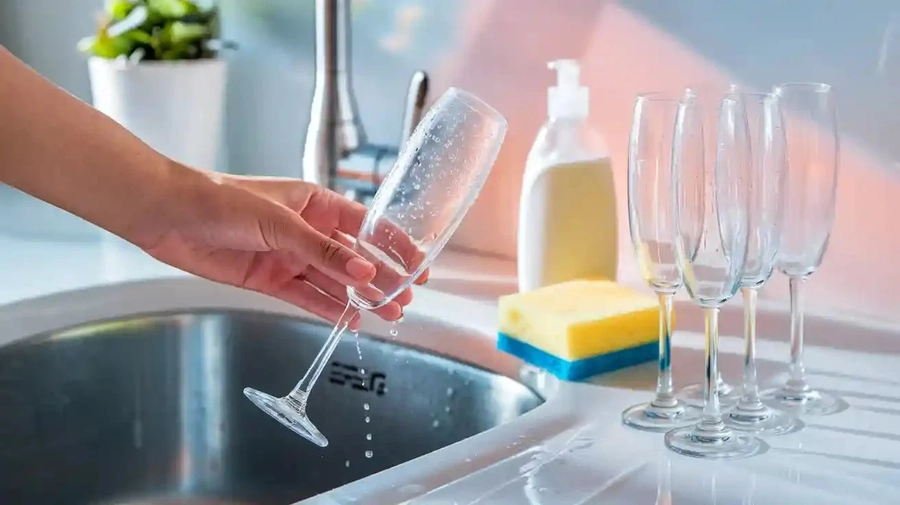
Pull a new pair of crystal whiskey glasses out of the box and the first question most owners quietly ask is the same one filling cleaning forums: how am I actually supposed to wash these without ruining them? The anxiety is justified. Crystal is softer and more delicate than ordinary glass, and the wrong routine — a hot dishwasher cycle, an abrasive sponge, a splash of the wrong cleaner — is how glasses end up dull, foggy, or permanently filmed. The good news: proper crystal care is simple once you know the rules, and almost all of the confusion online comes from mixing up two different products: modern lead-free crystal and traditional lead crystal. This guide covers both, for glasses and decanters.
The Golden Rule: Hand Wash, Every Time
Crystal’s own makers are unambiguous about this. Waterford’s official care guide instructs owners to hand wash crystal separately in warm, soapy water, rinse thoroughly, and dry with a lint-free cloth. Whiskey communities overwhelmingly agree — in r/whiskey threads on washing whiskey glasses, the standing advice is to hand wash, rinse away every trace of soap, and keep glasses out of the dishwasher entirely, because soap residue can taint the flavor of your next pour.
The step-by-step hand wash that works
- Use lukewarm water, not hot. Extreme temperature swings are a real stress on crystal, which is softer than soda-lime glass.
- Use a small amount of mild dish soap and a soft sponge or a long-handled glass brush for the bottom of the bowl.
- Rinse twice. A second rinse with clean lukewarm water removes the soap film that causes both water marks and soapy taste.
- Dry immediately with a lint-free cloth. Air-drying alone leaves mineral water marks on polished crystal.
That last step matters more than people think: cleaning communities consistently report that water spots form when crystal is left to drip-dry, so dry promptly and store glasses upright.
So… Can Crystal Glasses Go in the Dishwasher?
This is the most contested question in crystal care, and honest answer is: it depends on who made your glasses — but the cautious default is no. Some modern crystal brands, such as KANARS, state that their crystal glasses are technically dishwasher safe while still recommending hand washing for best results. Meanwhile, whiskey drinkers who have retired clouded glasses tend to warn newcomers off the machine altogether. If your manufacturer explicitly permits the dishwasher, use a gentle cycle, skip aggressive detergents, and never wash crystal alongside pots or plates that can chip the rim. If there is no such label, treat your glasses as hand wash only.
How to Fix Cloudy Crystal Glasses
Cloudiness is the single most common crystal complaint — a milky white film that ordinary washing won’t touch. It usually comes from hard-water minerals or detergent buildup, and the standard fix recommended by cleaning authorities like Martha Stewart’s guides is refreshingly cheap:
- Soak the glasses in a bath of warm water and white vinegar — many care guides suggest roughly 15 to 30 minutes, and KANARS’ official care instructions recommend exactly that ratio for its crystal glasses.
- For stubborn film, a paste of white vinegar and a small amount of salt, worked gently over the glass with a soft cloth, is a long-standing restoration trick.
- Rinse thoroughly with hot water, then hand dry with a lint-free cloth until the glass is clear again.
One caution: this vinegar treatment is for mineral film. If the glass has been etched by years of harsh dishwashing detergent, the damage is physical, not a deposit — no soak will fully reverse that, which is exactly why prevention beats restoration.
Cleaning a Crystal Whiskey Decanter (the Tricky One)
Decanters are harder because you cannot fit a hand inside. The practical method from cleaning communities: fill with lukewarm water, a drop of mild detergent, and decanter cleaning beads, then swirl gently so the beads scrub the interior for you. Rinse repeatedly and let it drain fully before storage.
Here is where material matters. For lead crystal decanters, experienced collectors advise against vinegar and acidic cleaners altogether — mild detergent and beads only — and they also warn against storing spirits in a lead crystal decanter for months or years, because lead can leach into the contents over long contact. Use lead crystal decanters for serving, not for storage.
The Lead Crystal Question: Should You Still Drink From It?
Retail guidance on lead crystal has shifted sharply. WebstaurantStore’s safety article states plainly that drinking from lead crystal is not recommended, and collector communities echo that the risk concentrates in long-term storage — a nightly glass of whiskey is a different exposure profile from bourbon living in a decanter for a year. The practical takeaway for most buyers is simple: modern lead-free crystal offers the same sparkle and ring with none of the anxiety, which is why virtually all current crystal whiskey glasses, including Cristamor’s entire range, are lead-free. If you want the full comparison, see our breakdown of K9 crystal vs lead-free crystal whiskey glasses.
Drying and Storage: Where Cloudiness Actually Starts
- Dry by hand immediately with a lint-free cloth — never leave crystal upside down on a wet dish towel.
- Store upright with space between glasses so rims don’t touch; padded or lined cabinet shelves are ideal.
- Keep decanters empty and open between uses so trapped moisture can evaporate — a sealed, damp decanter is how that permanent fog begins.
A Simple Routine You’ll Actually Keep
Rinse your whiskey glass with warm water right after each pour, give it a proper soap wash every few uses, run the vinegar soak only when film appears, and dry everything by hand. Two minutes of care preserves the clarity, the ring, and the flavor neutrality you paid for.
Choosing Crystal That’s Easier to Live With
If you’re replacing old glassware or choosing a gift, prioritize lead-free crystal and check the maker’s care instructions before buying. Our guides on choosing a lead-free crystal decanter and glasses set and whiskey glass types cover what to look for. Explore Cristamor’s lead-free crystal whiskey glasses to find glassware that keeps its sparkle with nothing more than the routine above — start with our glass type guide.
Final Word
Crystal whiskey glasses don’t ask for much: lukewarm water, mild soap, a soft cloth, and a dishwasher you agree to never trust with them. Fix film early with a vinegar soak, treat lead crystal decanters as serving pieces rather than storage, and your glasses will still ring clearly a decade from now.