
How Do You Know If a Whiskey Glass Is High Quality? Six Checks That Actually Work
Most whiskey glasses look the same in a product photo. In the hand, the difference between a genuine hand-cut crystal glass and a molded, etch-on-generic tumbler is obvious — if you know what to check. Drinkware guides over the past two years have converged on the same practical tests, and none of them require lab equipment.
1. The feel test: hand-cut facets vs surface etching
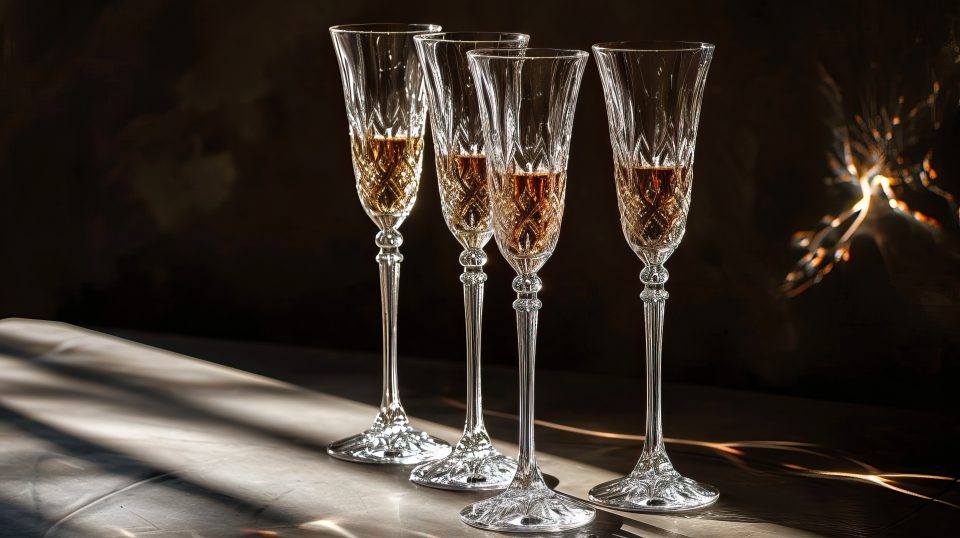
Run a fingertip across the design. Real hand-cut crystal has deep-relief facets — you can feel the geometry, and the cut edges are polished smooth rather than sharp or rough. Collectors’ guides note that genuine crystal’s cut edges feel slightly rounded or “soft” to the touch; sharp, brittle, or rough edges usually indicate molded glass or low-quality cutting. Surface etching, by contrast, sits flat on the glass skin — it changes the look but not the texture or the light.
2. Weight and density
Crystal contains minerals that make it significantly denser than ordinary soda-lime glass, so a genuine crystal glass feels surprisingly heavy for its size. A 2026 guide on decanter safety puts it plainly: a quality lead-free piece should feel solid, substantial, and cool to the touch — if it feels thin or hollow, that is a red flag regardless of the label.
3. Clarity and refraction
Crystal’s mineral content raises its refractive index — from roughly 1.52 for ordinary soda-lime glass to 1.55 and beyond. In practice: light bends harder, disperses into color, and the glass throws small rainbows and sharper highlights. Hold the glass up to light; flat, window-like pass-through suggests ordinary glass.
4. The lead-free statement
Classic lead crystal is a safety question for everyday drinkware. Reputable modern makers state “lead-free crystal” (K9 or equivalent) on the product page and packaging. Buyer guides consistently recommend checking for explicit labels or certifications — and treating vagueness about material as an answer in itself.
5. The rim and the pour
Quality shows at the rim: smooth, even, and pleasant to drink from, without molding seams. A well-made glass also balances in the hand — stable base, comfortable swirl — which molded tumblers often get wrong at the base where the machine finishes.
6. The presentation, if it is a gift
If the glass is sold as a gift, the box and engraving should match the craft: a wooden presentation case designed for keeps storage, and engraving placed on a smooth panel designed into the cut — not a logo stamped over facets.
Where Cristamor stands on these checks
Cristamor’s hand-cut glasses — including the Handcrafted Tanma Whisky Glass with Wooden Box and the Aqua Radiant Starburst Crystal Whiskey Glass — are made in lead-free K9 crystal with deep-relief hand cutting, published material claims, and book-opening wooden boxes. If you are comparing glasses side by side, our feature-by-feature choosing guide pairs well with this checklist.
The takeaway
Quality is checkable: feel the facets, weigh the glass, watch the light, read the material line, inspect the rim, and judge the presentation. A glass that passes all six is a keepsake; one that fails the first is a prop with a name on it.