
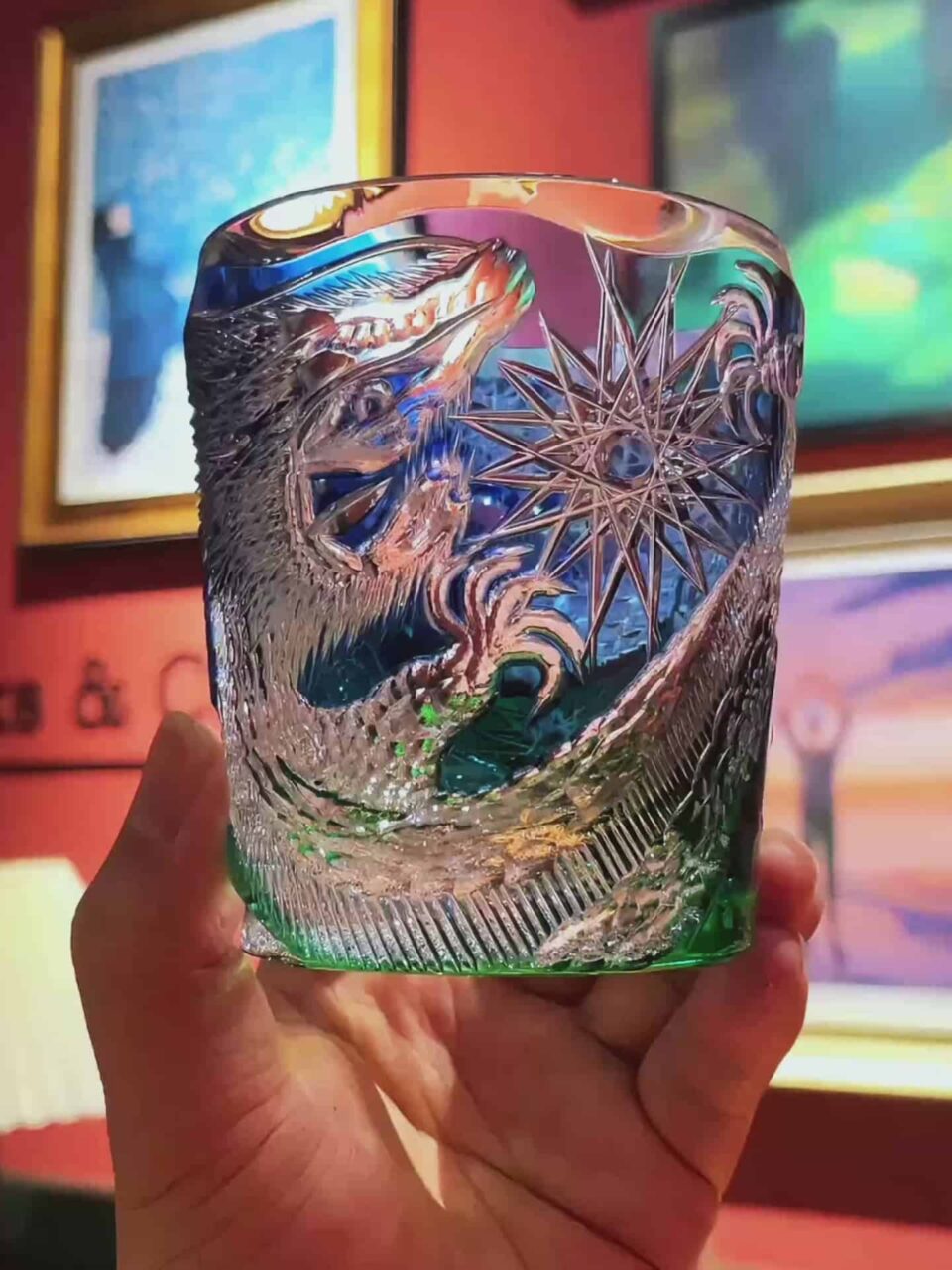
Lead-Free Crystal vs Lead Crystal Whiskey Glasses: An Honest Two-Sided Comparison
If you are shopping for a crystal whiskey glass, the lead-free vs lead crystal question is probably the first one you will face — and the answer matters more than most product pages admit. Here is what the actual material science and labeling standards say, without the fear-based marketing or the industry downplay.
What “lead crystal” actually means
The labeling standards vary by region. In the European Union, true crystal must contain at least 24% lead oxide by weight to qualify for the label. In the United States, the FTC permits “crystal” labeling for any glass with over 1% lead — or even no lead at all — provided it is marketed appropriately. This means a “crystal” glass bought in the US may contain significantly less lead than one bought in Europe.
The leaching question: occasional use vs storage
Research has confirmed measurable lead leaching when spirits are stored in lead crystal decanters over weeks or months. However, the picture changes for occasional use: occasional serving of whiskey from a lead crystal glass is generally considered not to pose significant health risk — the leaching process does not occur in a short period. The real risk is storage: leaving whiskey in a lead crystal decanter for days or weeks exposes the liquid to progressively more lead.
Lead-free crystal: the modern alternative
Lead-free crystal (typically K9 or equivalent optical-grade glass) substitutes other strengthening agents — typically barium oxide, zinc oxide, or potassium oxide. The result: crystal that can be blown thinner without fragility, maintains comparable clarity and refraction, contains no heavy metals that can migrate into spirits, and is often top-rack dishwasher safe — a practical advantage traditional lead crystal cannot offer.
Side-by-side comparison
- Lead crystal: higher refractive index, traditional heritage, heavier feel; requires hand washing; not recommended for storing spirits long-term
- Lead-free crystal (K9): comparable clarity and refraction; natively lead-free by design; thinner walls possible; dishwasher safe; no storage risk
- Ordinary soda-lime glass: lower refractive index; more durable but less brilliant; no crystal designation
The honest answer for whiskey drinkers
For everyday whiskey drinking, lead-free crystal is the clear choice — no storage risk, easier care, and comparable optical quality. Lead crystal remains safe for occasional serving (not storage), and some collectors value its heritage. If you see a product labeled simply “crystal” without a lead-free statement, ask the manufacturer directly.
Where Cristamor stands
Every Cristamor glass — including the Cobalt Ember Lattice, Clear Prism (Hand-Cut K9), and Handcrafted Tanma with Wooden Box — is made in lead-free K9 crystal, stated plainly on the product page. If you are comparing crystal glassware, our honest buyer’s guide to lead-free crystal safety covers the topic in more depth.
The takeaway
Lead-free crystal eliminates the storage risk, simplifies care, and delivers comparable optical quality. For a whiskey glass you will use regularly — or gift to someone who will — lead-free K9 crystal is the honest choice.