
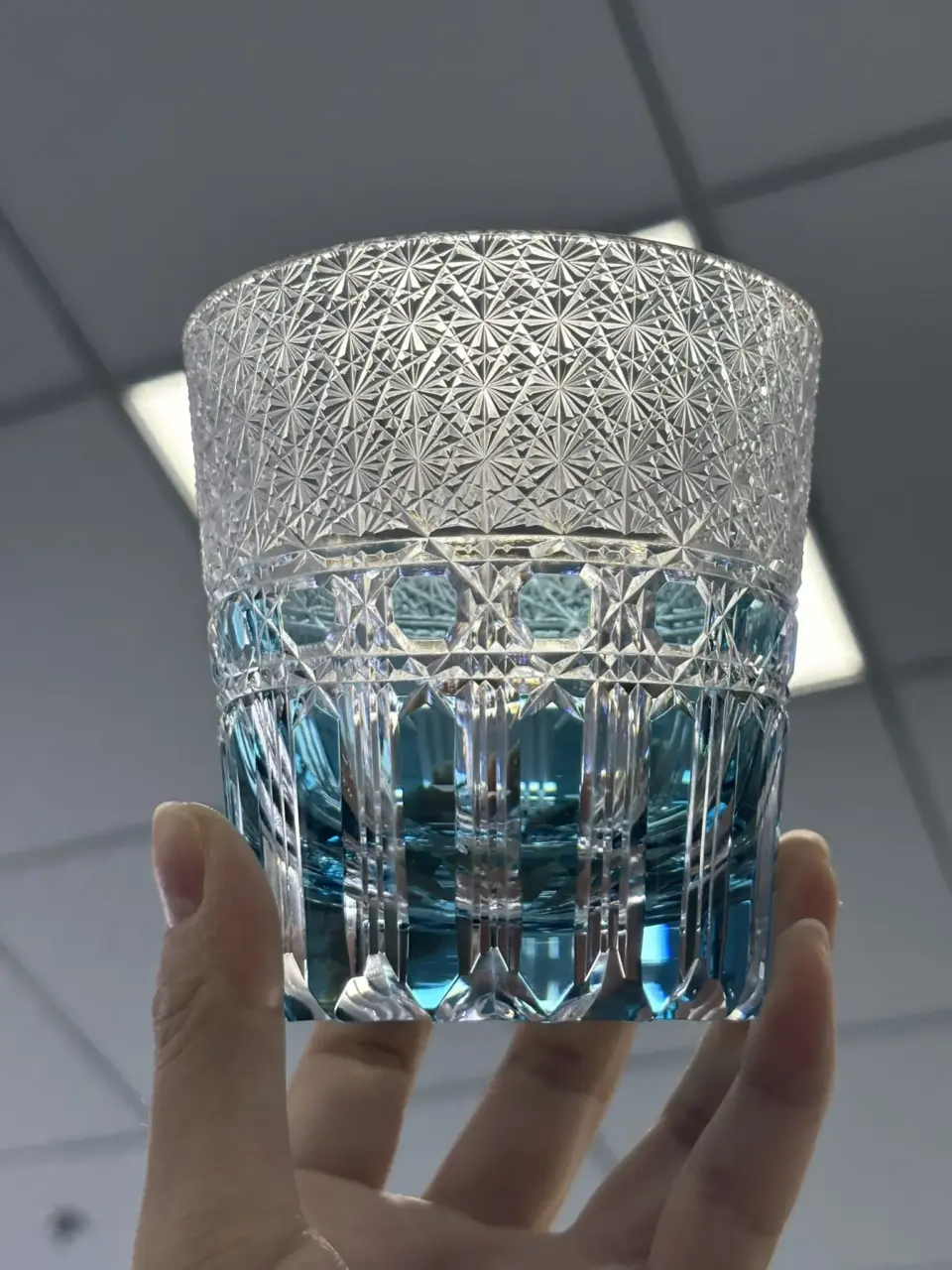
Every gift giver knows the two classic failures. The first: a present so specific that it only works if the recipient happens to like one exact thing. The second: a present that photographs well but feels cheap the moment it leaves the box. Whiskey glass sets keep showing up on gift guides because, more than almost any other bottle-adjacent gift, they answer both problems at once — and because a good set keeps answering them for years.
So: is a whiskey glass set a good gift? The honest answer is that it is one of the safest choices in the drinks category — but the gap between a good set and a cheap one is exactly the gap between a gift that gets used weekly and a gift that migrates to the back of a cabinet. This guide gives you a practical framework: why sets are the safe baseline, what separates quality from filler, how glass-stones-decanter pairings tier up, when engraving helps versus hurts, and the warning list to check before you click buy.
Why a whiskey glass set is the safe-gift baseline
Most gift anxiety around whiskey comes from guessing: guessing whether they prefer bourbon or Scotch, guessing whether they drink it neat or on ice, guessing whether they already own something better. A glass set sidesteps nearly all of that. The recipient does not need a favorite expression, a particular palate, or any prior collection — every whiskey drinker, from the Sunday-and-special-occasions type to the label collector, pours into a glass.
Gift guides keep landing on the same conclusion. One widely-cited glassware guide calls whiskey glasses “the single safest gift in drinks”, and set-focused roundups reach the same verdict from a different angle: pre-made sets are explicitly recommended for time-pressed buyers, because someone else has already done the matching work — the pairing, the proportions, the presentation. You are not gambling on taste. You are gifting the ritual.
There is also a quiet emotional layer here. A dedicated glass says: I see that this is something you enjoy — without presuming to know exactly how you enjoy it. That is a hard combination to beat, and it is why sets work equally well for Father’s Day, weddings, promotions, and the holiday pile.
What separates a good set from a cheap one
Here is the uncomfortable part, and the reason this guide exists: set quality is largely invisible until unboxing. Packaging photographs beautifully by definition. The failure modes only appear in use. If you know what to check, you can judge a set from the product description alone.
1. Lead-free crystal (or honest glass)
Quality-focused guides repeatedly flag the same material problem: many gift sets are poorly made, not airtight, or made of lead crystal. Lead crystal is a legacy material that still shows up in low-cost decanter sets — it is worth checking the product description for the words “lead-free” or “crystal glass” before buying. If a listing is vague about the material, treat that vagueness as the answer.
Not sure how to judge materials from a listing? Our guide to telling real crystal from cheap glass walks through six simple tests — most of which work from product photos, not just in person.
2. Weight, balance, and rim
The difference between a glass that feels like a gift and a glass that feels like a giveaway is mostly tactile: weight in the hand, balance in the base, and a rim that is polished rather than sharp. Thin, rushed rims are one of the specific failure points reviewers call out in cheap sets — and they are felt on the very first sip, which is the worst possible moment for your gift to reveal itself as cheap.
What “good” feels like, concretely: our breakdown of weight, balance, rim, and grip gives you the four checkpoints that separate a glass people reach for from a glass people rinse and shelve.
3. Durability in real use
A set earns its keep over months, not minutes. A working glassmaker’s warning list is blunt about the pattern: low-cost glassware can look fine in the box, then chip or cloud in everyday use — thin walls, soft glass, and rushed finishing all show up after a few weeks of washing and pouring. This is the single strongest argument for buying one well-made set instead of two disposable ones.
4. If the set includes a decanter: airtight matters
Decanter sets look the most impressive and fail the most quietly. The same quality guides that flag lead crystal also flag decanter stoppers that do not actually seal — which turns a showpiece into a slow evaporation experiment. If the set you are eyeing includes a decanter, check that the stopper is described as sealed or ground-glass fitted, not decorative.
The pairing math: glass + stones + decanter
The smartest gift sets are not random assemblies of barware — they solve three different problems, and the best ones let you tier up deliberately. Reviewers who study these pairings describe the logic clearly: a proper tasting glass, chilling stones, and a matching decanter each solve a different part of the drinking experience.
- The glass solves aroma and delivery — what you smell and how the whiskey lands.
- The stones solve dilution — whiskey drinkers who want it cold without watering it down, which quality reviewers note is a real problem worth solving, not a gimmick. (If you want the full science, we compare dilution versus chilling in why whiskey tastes different with ice.)
- The decanter solves presentation and aeration — the ceremony layer that turns a drink into a small occasion.
Tiering works like this: a well-made glass pair in a presentation box is a complete gift on its own. Add genuine chilling stones and you have covered the dilution problem for drinkers who like it cold. Add a sealed, lead-free decanter and you have crossed into the territory of wedding and milestone gifts — the tier most corporate gift guides treat as the executive standard. If you are buying for clients or senior colleagues, our guide to premium whiskey gifts for clients and special occasions maps these tiers in detail.
Personalization: when engraving helps and when it hurts
Engraving is the most tempting upgrade on any glass set, and the most polarizing. Reviews of personalized decanter sets tend to draw the same line: personalization lands best when the gift matches a habit the recipient already has — a name or date on glassware that will actually be used, rather than a novelty that will be avoided.
The practical version of that rule:
- Engraving helps when the recipient drinks whiskey regularly, when the occasion is a milestone worth marking (wedding, retirement, anniversary), or when the set is jointly owned — a couple’s names on a wedding set, for example.
- Engraving hurts when you are unsure how the recipient feels about personalized items, or when the marking locks the gift to one person who may want to share it.
Before committing, it is worth understanding what engraving actually does to crystal — techniques, durability, and the questions most buyers never ask are covered in is engraving worth it?
The cheap-set warning list
Before you buy, run any candidate set against this checklist — five flags drawn from the failure patterns reviewers report most consistently:
- Vague material description. If the listing does not say lead-free crystal or name the glass type, assume the cheapest option on the factory floor.
- Feather-light glasses. Weight is a proxy for wall thickness and finishing time. Ultra-thin, rushed rims are the classic cheap tell — and they are felt at first use, after surviving the unboxing.
- Lead crystal in the decanter. Legacy material, real concern, easy to avoid: check the description.
- A decorative stopper. If the decanter’s seal is not mentioned, the decanter is not airtight — and that is the failure reviewers flag most in low-cost sets, alongside poor overall construction.
- “Stones” that are not stone. Genuine soapstone or granite behaves differently from painted ceramic pebbles. Real stones are part of why reviewers rate stone-and-glass pairings so highly; substitutes dilute the gift’s whole point.
None of these checks takes more than a minute on a product page — and together they are the difference between the safe gift and the sorry one.
A 60-second buyer’s checklist
Compressing everything above into the version you can run in a store tab:
- Baseline: a glass set is among the safest whiskey gifts because it requires no taste-guessing — confirm the set is complete (glasses, and stones or decanter if promised).
- Material: lead-free crystal or clearly named glass; walk away from vague listings.
- Feel: real weight, polished rim, balanced base — the checkpoints that make a glass a pleasure to hold.
- Decanter (if included): sealed stopper, honest capacity, no lead crystal.
- Stones (if included): genuine soapstone or granite.
- Personalization: engrave only when the habit is certain and the occasion is real.
- Presentation: a wooden or lined box does double duty — protection in transit and ceremony at unboxing.
The bottom line
A whiskey glass set is not just a good gift — for the majority of recipients it is the rare gift that is safe to give and genuinely welcome to receive, provided you spend ninety seconds verifying material, weight, and seal before buying. Gift guides keep ranking sets at the top of the category because the framework above almost always produces a winner: a set that gets used, noticed, and remembered.
That standard — hand-cut lead-free crystal, real weight, polished rims, genuine stones, and presentation boxes built for the unboxing — is exactly what we build every Cristamor set around. Browse the Cristamor whiskey glass gift sets and find the tier that matches your occasion, from a first excellent pair to the full glass-stones-decanter presentation.