
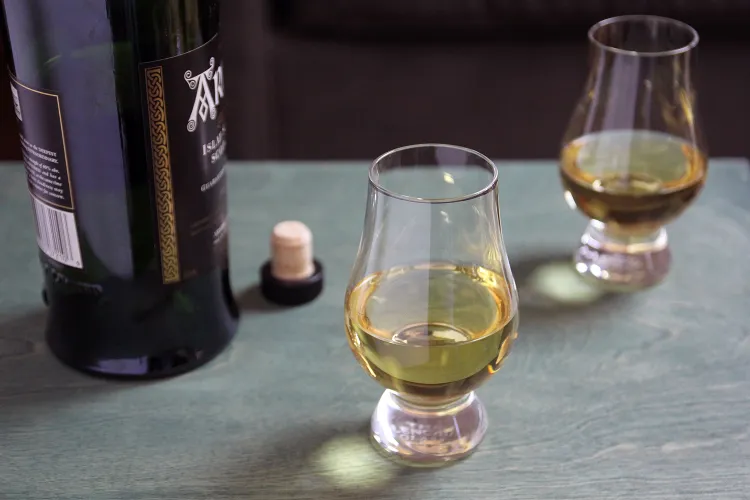
If you have spent any time around whiskey, you have seen it: the small, tulip-shaped glass with no stem that appears in every distillery photo and every tasting set. That is the Glencairn — and since its launch in 2001 it has become the default whiskey tasting glass worldwide. This guide explains what it is, where it came from, how to actually use one, and what to know before buying — including the variants, the care realities, and the debates whiskey drinkers still have about it.
What Exactly Is a Glencairn Glass?
The Glencairn whisky glass is a style of drinking glass developed and produced by Glencairn Crystal Ltd, a crystal company in East Kilbride, near Glasgow, Scotland, operating since 1981. It was designed by the company’s founder, Raymond Davidson, who set out to solve a real problem: whiskey had no dedicated tasting glass, and figures in the industry were drinking from cut crystal or copitas that were beautiful but not shaped for nosing.
Davidson’s design was developed with input from the Scotch Whisky Association and launched in 2001 — nearly twenty-five years after he first sketched the idea. The shape borrows from the copita and sherry nosing traditions: a wide bowl that tapers to a narrowed mouth, on a short, solid base. The bowl gives the whiskey room; the taper concentrates its aromas toward the nose; the sturdy base makes it practical for tasting rooms and home bars alike.
Why the Shape Works: Nosing Mechanics
The Glencairn’s tulip form is functional, not decorative. The wide body lets the whiskey breathe and releases its volatile aromas; the inward taper gathers those aromas as you bring the glass to your nose, which is why distilleries themselves pour samples into Glencairns at tastings. The narrowed mouth also encourages small, careful sips — the pace that serious tasting rewards.
One honest caveat that experienced drinkers raise: with high-proof whiskey, that focused rim can funnel ethanol burn straight into your nose and mask the aromas underneath. If a dram stings, let it rest a minute or add a few drops of water — the glass is not wrong, but the pour might be.
How to Use One: The Short Version
- Pour small — around 50ml, filling to the widest part of the bowl.
- Nose first — hold the glass below your nose and breathe in gently with your mouth slightly open.
- Taste in stages — sip neat to map the primary tastes; add a few drops of water if the proof dominates.
- Compare — the Glencairn’s real power is side-by-side tasting: the same pour in the same glass makes comparisons fair.
The Variants: Standard, Canadian and Cut Crystal
Buyers are often surprised to learn “a Glencairn” is not one single glass. The main variants:
- Standard Glencairn — the classic 6-7oz tasting glass; concentrates aroma the most; the default for whisky tastings worldwide.
- Canadian Glen — noticeably larger, holds ice comfortably and is less fragile in daily use; slightly less aroma concentration.
- Cut crystal versions — the same tulip geometry in heavier, decorative crystal; more gift-worthy and substantial, at a higher price.
Community threads also surface authenticity questions — rim thickness and weight vary between production runs, and buyers have reported differences between sources. If the glass is a gift or a collector piece, buy from established retailers and check the base engraving. And note the practical trade-off of the format: the stemmed, delicate profile is what makes it a great nosing glass, but it is less stable and less dishwasher-friendly than a rocks tumbler — many enthusiasts simply own both, each for a different night. Our Glencairn vs whiskey tumbler guide breaks that choice down.
The Debate, Refereed
Whiskey forums have run this argument for years: Glencairn loyalists say nothing concentrates the nose better; tumbler partisans counter that high-proof bourbons drink hot in a narrow rim, that tumblers handle ice and cocktails, and that a heavy cut-crystal glass simply feels more satisfying. Both sides are right — which is why the honest answer is a matter of drinking style rather than a verdict. Serious tasters keep Glencairns for neat pours; everyone else is entitled to a rocks glass with a big cube.
Gifting: The Personalized Glencairn Market
The Glencairn is also one of the most giftable whiskey glasses in existence — Glencairn’s own personalised line, engraved sets from specialist retailers, and monogrammed gift boxes are all established categories. Personalized tasting glasses, whiskey glass gift sets and cut-crystal keepsakes dominate the wedding and corporate gifting space — and if your recipient is a rocks drinker, a personalized cut-crystal tumbler is the format they will actually use. Our custom engraving guide covers the ordering rules that save gifts.
The Bottom Line
A Glencairn whiskey glass is the modern standard for tasting whiskey: a tulip-nosed nosing glass designed by Raymond Davidson, launched by Glencairn Crystal in 2001 with the Scotch Whisky Association’s backing, and now the default in distilleries and tasting rooms worldwide. It concentrates aroma better than any tumbler, rewards careful sipping, and comes in variants to match every hand and budget — while a good rocks glass remains the right tool for ice, cocktails and casual nights. Explore the Cristamor collection for hand-cut, lead-free crystal whiskey glasses built for both rituals — and for the material behind the glass, see our optical vs lead crystal guide or the value anatomy guide.