
Are Expensive Whiskey Glasses Just a Luxury?
It is the quiet question behind every glassware page: do I actually need a $50 whiskey glass, or am I paying for the box it comes in? The honest answer is neither “yes, pure luxury” nor “no, money is no object.” Whiskey glasses occupy three distinct tiers — a quality floor, a sweet spot, and a luxury zone — and each tier buys something different. Here is how to tell them apart, and where a premium glass stops being a luxury and starts being a tool.
The Short Answer: Quality Is a Purchase. Luxury Is the Garnish.
Across testing labs, whiskey forums, and value-minded communities, the same conclusion keeps surfacing: a good glass makes the experience better; an expensive glass does not automatically make it better still. Whiskey writers put it plainly — pouring “liquid gold” into a pricey glass “won’t make it taste better,” and you can get genuinely good whiskey glasses at affordable prices. The smart move is not “spend more” or “spend less.” It is knowing which tier you are shopping in.
Tier 1: The Quality Floor — Where Cheap Fails
Going cheap has a cliff edge. Testers who work through budget options regularly reject glasses for build reasons: one well-known value pick was dismissed as “too thick and clunky with a lower-quality build,” and off-brand tulip glasses are typically thicker than the original, which dulls the very effect that makes the shape work. A glass that is badly balanced, poorly finished at the rim, or shaped without intent will quietly degrade every pour you serve in it. Below this floor, saving money costs you the experience.
Tier 2: The Sweet Spot — $7 to $15 Is Where Performance Peaks
Here is the part the luxury market would rather you did not notice: professional testers keep handing their top marks to inexpensive glasses. A $7-per-glass tumbler won praise for “just enough heft” and a comfortable rounded lip. A $10 crystal pick was called the happy medium — classy, dishwasher-safe, at home with a margarita as with an Old Fashioned. And the Glencairn, the community’s default tasting glass, sells for roughly $10-15 — making it what one guide calls “the rare ‘best’ that is also nearly the cheapest option in its category.” In this tier you are buying tested performance. Nothing about it is a luxury.
Tier 3: The Luxury Zone — What the Extra Money Actually Buys
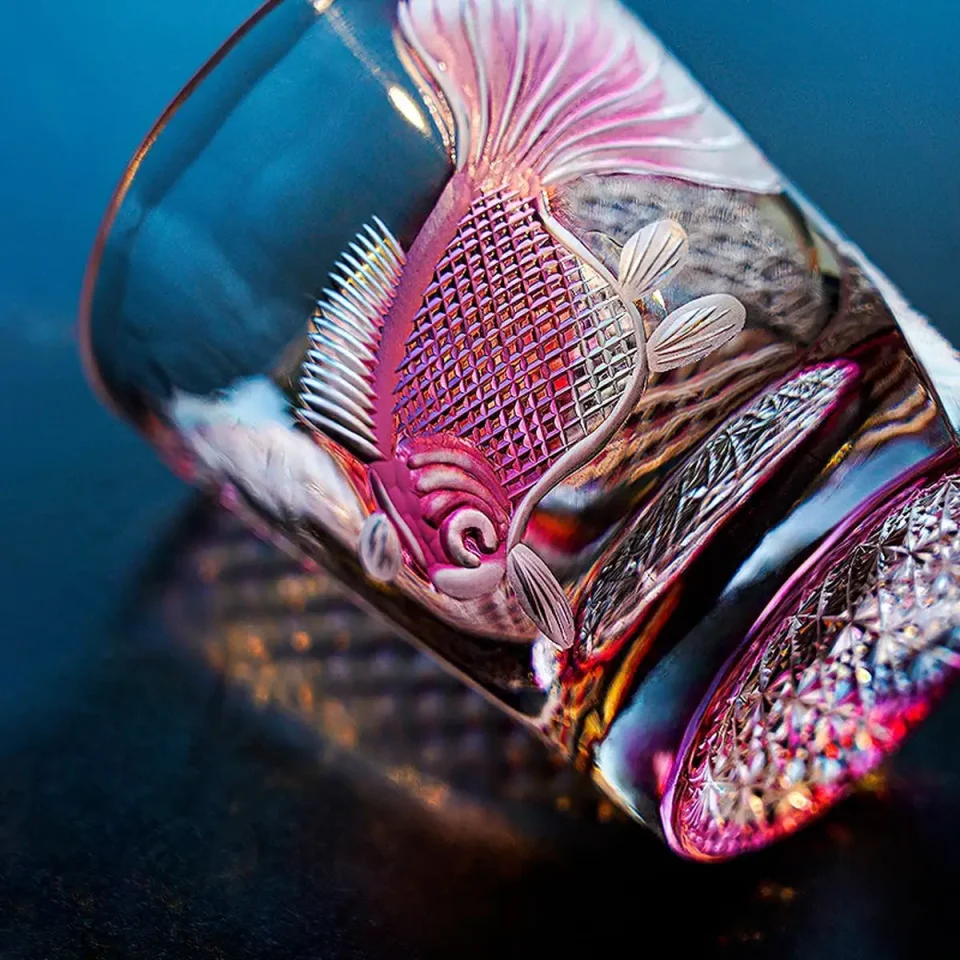
Above the sweet spot, the market changes what it is selling. Editorial roundups of “luxury whiskey glasses to splurge on” run from about $32.50 up to $185 per glass, and their justifications are design pedigree, rare materials, and self-image — one piece ends with “if you want your whiskey to taste like success, this is the glass for you,” which is an honest tell: at this tier, the product is elegance, not function. That does not make luxury glass a scam. Hand-cut crystal, limited runs, and heritage craft names are real things with real value — they are simply optional value. You are buying artistry and the way it makes the table feel, not a better-tasting pour.
The Fragility Test: Where Luxury Glass Fails Real Life
Before paying premium money, apply the test luxury listings never mention: will it survive your actual life? A former luxury-restaurant professional recalls $80 hand-blown Italian crystal that was “so stupidly fragile” it could not be handled without anxiety. A homeowner’s expensive wedding-registry glasses lost two of four to rim chips within ten years of ordinary holidays, poker nights, and helpful relatives running the dishwasher. There is a reason whiskey communities often recommend sturdier builds for regular drinking: a thicker lip is more forgiving, and a glass you fear breaking is a glass you will not reach for. Craft and durability are not the same thing — and only one of them is a daily companion.
The Amortization Math That Settles the Debate
The pro-glassware argument was never about price — it is about what the price is anchored to. Avid drinkers make the point directly: when the bottles you open run well past $50, a $10-15 glass that serves every one of them is rounding error. One quality glass is a one-time cost spread across every pour you will ever take. Luxury is different: it does not amortize, because what you are buying is the occasion, not the utility. Ask yourself which one you are shopping for, and the “just a luxury?” question answers itself.
How to Decide in 30 Seconds
- Daily drinker? Stay in the sweet spot — tested picks from $7-15 outperform their price by a wide margin.
- Buying a gift with weight to it? Above the sweet spot, pay for craft you can verify — deep hand-cut work, real crystal, a maker who explains the process. Our guide to where expensive glass prices actually go shows what to look for.
- Checking any glass before you buy? Run the six quality checks — they work the same at every tier.
- Worried about fragility? Match the build to your life: sturdier walls for busy households, delicate pieces only for the shelves you control. The lead-free vs lead crystal comparison covers the material side.
The Cristamor Takeaway
Are expensive whiskey glasses just a luxury? The ones priced for pedigree are. The ones priced for craft are something better: a working tool that happens to be beautiful. That is the standard Cristamor builds to — hand-cut lead-free crystal, deep relief cut by hand, priced against the work involved and made to be used, not shelved. We would rather earn the premium with craft receipts than with a success slogan.
Decide for yourself: see what separates true hand-cut crystal from etch-on-generic glassware — and if you are buying for someone else, the gift guide matches craft depth to the occasion.