
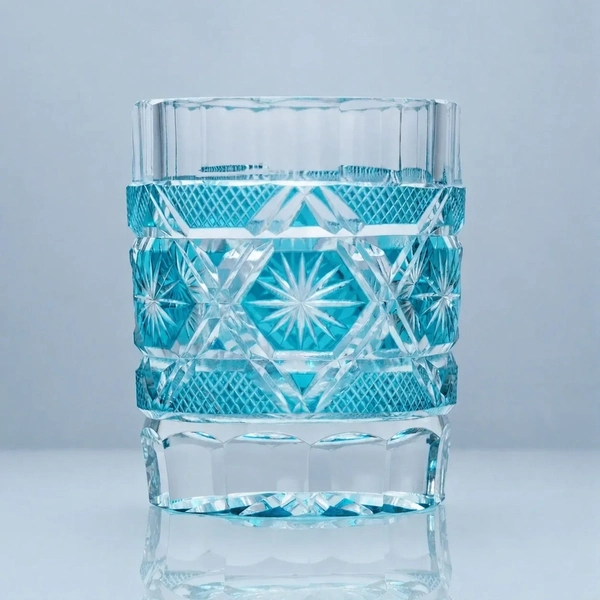
It’s the question that comes up after every dinner party and every gift unboxing: can crystal whiskey glasses go in the dishwasher? Ask around and you’ll hear confident answers on both sides. Some cleaning experts say never. Some brands label their glassware dishwasher-safe. Plenty of whiskey drinkers quietly machine-wash their glasses on the top rack and see no obvious harm — at first.
The honest answer is material-specific: it depends on what your “crystal” actually is, whether it has hand-cut facets, and what the manufacturer explicitly allows. Below is a definitive, no-hype breakdown of what a dishwasher really does to crystal, which risks are permanent, and the safe protocol to follow if you ever do run your glasses through the machine.
The Short Answer: Hand Washing Is the Safe Default
If you do only one thing after reading this: wash your crystal whiskey glasses by hand. That is the safe default for traditional lead crystal, for lead-free crystal without an explicit dishwasher-safe label, and for anything with hand-cut facets or decorative details. If — and only if — a specific glass is labeled dishwasher-safe by its maker, a delicate-cycle run becomes a defensible fallback, with a few non-negotiable rules covered below.
What Actually Happens to Crystal in a Dishwasher
Crystal is softer and more delicate than ordinary glass, which is exactly what gives it brilliance — and exactly what makes it vulnerable to a machine built for plates and pans. Two mechanisms do most of the damage.
High-pH Detergent: The Etching Engine
Dishwasher detergents are highly alkaline — typically in the pH 10–12 range. According to dishwasher-care specialists, detergents that strong microscopically etch crystal surfaces, and the damage becomes visible as permanent cloudiness after roughly 10–20 cycles. That slow onset is what makes etching so sneaky: the first few washes look fine, the glass gradually loses its sparkle, and by the time you notice the haze, the surface damage is already done.
Thermal Shock: Heat That Cracks
Dishwashers also cycle through large temperature swings — around 140°F between hot wash water and heated drying. Thin-walled crystal glasses and delicate stems are vulnerable to those swings, which can crack thin walls and stems outright or stress them for a future failure.
The Machine Environment Itself
Beyond chemistry and heat, cleaning-industry guidance also points to abrasive particles and strong chemical agents in the wash environment, which are harsh on delicate crystal surfaces. High-pressure jets and rattling racks are simply not an environment fragile glassware was made for.
Etching vs. Film: What’s Permanent and What Can Be Fixed
Not all cloudiness is the same, and knowing the difference saves you from wasting an afternoon on “restoration” tricks that cannot work.
- Etching is irreversible. As glass-care explainers note, the alkaline detergent and wash conditions remove metal ions from the glass surface, leaving microscopic roughening. No vinegar, no polish, no cleaner can restore that surface.
- Hard-water film is removable. Cloudiness caused by calcium and magnesium deposits sits on top of the glass and can be dissolved — which is why vinegar soaks and similar remedies sometimes “fix” a cloudy glass and sometimes do nothing at all.
Quick test: if a warm white-vinegar soak restores clarity, you had film — and you got lucky. If it doesn’t, you’re looking at etching. That asymmetry is the strongest argument for prevention: once crystal is etched, no product buys the sparkle back.
Not All “Crystal” Is the Same: Lead Crystal vs. Lead-Free
This is the distinction most generic care guides skip — and it changes the answer completely.
Traditional lead crystal: treat it as a no-dishwasher material. Cleaning experts are blunt about it; Southern Living’s team “strenuously discourage” running crystal through the machine, with a flat “No dishwashers!” verdict for antique cut crystal.
Modern lead-free crystal: materially more tolerant. As one care guide puts it, “lead-free crystal may be dishwasher-safe, but lead crystal generally isn’t” — and even then, the recommendation is a gentle cycle with no high heat, and always deferring to the manufacturer’s guidance. This is why some modern glassware carries an honest dishwasher-safe label while heirloom crystal never does.
Curious what your glasses are actually made of? Our guide to K9 crystal vs. lead-free crystal whiskey glasses breaks the materials down, and we explain why K9 optical crystal is not ordinary crystal glass.
Why the Labels Disagree: The “Dishwasher-Safe” Reality
Part of the confusion is real and market-driven: dishwasher-safe crystal products genuinely exist. Some retailers merchandise entire “dishwasher-safe crystal glasses” categories, and some brands state that all of their crystal glassware is dishwasher safe — while still recommending hand washing to increase its lifespan.
The honest reading of that landscape: “dishwasher-safe” is a claim about one manufacturer’s specific product and testing, not a property of crystal in general. A dishwasher-safe label on one brand’s tumbler tells you nothing about your unlabeled cut-crystal heirlooms. If your glass has no explicit label, the conservative answer is the correct one: no dishwasher.
What Whiskey Drinkers Actually Do
Whiskey communities have settled on a strong hand-wash norm — and their reason is flavor, not just glass care.
- r/whiskey users commonly report hand washing with soap and water after every use.
- r/Scotch users advise against dishwashing crystal Glencairns for a specific reason: “soap residue can taint the flavor of your next pour.”
- A widely shared r/bourbon post from 2021 described a side-by-side comparison in which a dishwashed glass imparted an off taste compared with the same glassware hand-washed — enough to convert the poster to hand-washing everything.
A minority of drinkers do machine-wash on the top rack “when lazy,” and their glasses usually survive. But the emotional driver in the community is telling: whiskey drinkers care about what the glass adds to (or subtracts from) the pour. Detergent film you can’t see can absolutely taste.
The Hand-Cut Facet Warning
If your glasses feature hand-cut facets — the defining trait of Cristamor’s tumblers — the stakes go up a level. Cleaning experts note that intricate designs and sharp facets can trap residue or develop wear over time if not cleaned gently. Machine washing concentrates detergent and grime in exactly those fine grooves, and blurred facet edges are permanent.
Facet crispness is what you’re paying for with hand-cut crystal; it’s also how you spot real hand-cut crystal in the first place. Decorative elements — painted designs, gold rims, applied etching — are additional red flags for any dishwasher, since fading and chipping of those details is a classic sign of glassware that was never meant for the machine.
If You Must: The Delicate-Cycle Protocol
Sometimes hand-washing twelve glasses after a party isn’t realistic. If your glasses are explicitly labeled dishwasher-safe, this is the protocol modeled on American Cleaning Institute guidance — treat each step as required, not optional:
- Confirm the label first. No dishwasher-safe label means no dishwasher — the delicate cycle does not neutralize the chemistry above.
- Top rack only, seated securely so nothing can tip or rattle.
- Space the glasses so they can’t touch, chip, or block the spray.
- Use the delicate or gentle cycle with a mild detergent, sparingly dosed.
- Skip heated drying — open the door and air-dry, or towel-dry by hand.
- Hand wash as the default; the machine is the exception, not the routine.
Even brands that machine-wash fine glassware still recommend hand washing to maximize lifespan. Follow that spirit: the dishwasher is a pressure valve for big evenings, not a weekly habit.
The 60-Second Hand-Wash Routine (What We Actually Recommend)
- Lukewarm water, a small amount of mild dish soap, and a soft cloth or sponge — nothing abrasive.
- Wash soon after use; whiskey residue and sugars harden and make etching-prone scrubbing more likely later.
- Rinse thoroughly. Invisible soap film dulls brilliance and interferes with aroma and flavor.
- Polish with a microfiber cloth while the glass is still slightly damp to prevent water spots.
- Store upright with breathing room between glasses.
For a deeper walkthrough, see our gentle care guide on how to clean crystal whiskey glasses and prevent cloudiness, and our complete guide to caring for hand-cut crystal.
Already Cloudy? What Can and Can’t Be Fixed
If a dishwasher already dulled your glasses, start with the reversible cause: a warm white-vinegar soak or a gentle baking-soda paste addresses hard-water film. If clarity doesn’t return, the surface has likely been etched — and etched glass cannot be restored to its original finish. That’s the quiet argument for hand-washing from day one: prevention costs a minute per glass; etching costs the glass.
Where Cristamor Glasses Fit In
Cristamor whiskey glasses are hand-cut from K9 lead-free optical crystal — a material chosen precisely because it combines brilliant optical clarity with the greater tolerance of modern lead-free crystal. But every design we cut, from the Fuji Wave to the Star Lattice, lives or dies on facet precision. High-pH detergent, 140°F swings, and rack vibration are the enemies of that precision, which is why our care advice matches our craft: hand wash, always.
If you’re choosing a glass that will hold its sparkle for years — or gifting one that will — browse the Cristamor collection of hand-cut crystal whiskey glasses. A piece like the Amber Fuji Wave hand-cut crystal tumbler shows exactly what careful cutting and careful washing preserve together.
Frequently Asked Questions
Can lead-free crystal go in the dishwasher?
Only if the manufacturer explicitly says so. Lead-free crystal is materially more dishwasher-tolerant than lead crystal, but the safe rule is to check the label first and, even for labeled glasses, use a gentle cycle without high heat.
Why did my crystal glasses turn cloudy in the dishwasher?
Two possible causes: hard-water film, which is removable with a vinegar soak, or etching from high-pH detergent (pH 10–12), which is permanent and typically shows up after roughly 10–20 cycles. If a vinegar soak doesn’t restore clarity, the etching has already happened.
Is the top rack enough protection for crystal?
It helps, but it isn’t enough on its own. Top-rack placement keeps glasses farther from the heating element, yet it does nothing about alkaline detergent chemistry or thermal swings. A truly careful machine wash needs the label check, top rack, spacing, delicate cycle, and no heated dry — all together.
Final Pour
The dishwasher question doesn’t have one universal answer — but it has one reliable default. Hand wash is the safe choice for crystal whiskey glasses, hand-cut and lead crystal especially. Machine washing is a labeled-and-delicate exception, never the routine. Your facets stay sharp, your glass stays brilliant, and nothing comes between you and the whiskey itself.
Ready for a glass worth washing by hand? Explore the Cristamor hand-cut K9 crystal whiskey glass collection — and keep our complete hand-cut crystal care guide bookmarked for every glass that follows.