
Ask two whiskey drinkers whether the glass matters and you’ll get two confident, opposite answers. One swears a tulip-shaped tasting glass transformed how their single malt smells; the other insists it’s all placebo and marketing. Both sides have a point — and that’s exactly why this question deserves an honest answer instead of a sales pitch.
So: does a whiskey glass change the aroma? Yes — the shape of a glass changes how aromatic vapors travel, concentrate, and reach your nose. But the size of that effect depends on what you’re drinking, how you drink it, and which glass you’re comparing. Here’s the evidence-first breakdown, including where the skeptics are right.
The Short Answer
A glass doesn’t change the whiskey — it changes the air above the whiskey. Aroma compounds are volatile: they constantly evaporate off the liquid surface and drift into the space inside your glass. Whatever shape that space has decides whether those vapors funnel toward your nose in a tight, concentrated stream or scatter into the room. Mainstream tasting guides agree on this basic mechanism: narrower openings concentrate aromas, while wider openings disperse them.
What a glass can’t do is add flavor, smooth the liquid itself, or turn a harsh pour into a great one. Keep that boundary in mind and the marketing noise gets much easier to filter.
The Physics: Why Shape Changes What Your Nose Receives
Narrow rims gather aroma; wide rims let it escape
Education sites built for tasting students are blunt about this: the shape of the glass changes how aromas are captured and delivered, and a tulip-shaped profile like the classic Glencairn concentrates scents toward the rim. A tapered bowl traps vapors that would otherwise drift away, while a wide tumbler’s open mouth offers them an easy exit. Narrow-rim glasses also slow the escape of aromatics, giving you more time to nose the spirit before it fades.
This is the same reason sommeliers swirl wine in a stemmed glass: you’re managing a small, moving cloud of aromatic vapor. A whiskey tasting glass simply applies that idea to a dram.
The ethanol problem — and why burn masks aroma
Here’s the part most beginners miss: alcohol vapor rides along with aroma, and it carries a sting. Take a deep sniff from a wide, open glass and what hits you first is often ethanol burn — which actively masks the delicate notes underneath. Tasting-glass guides describe the tradeoff directly: a rocks-style glass tends to emphasize that burn, while a narrowed bowl helps direct ethanol away from the nose while concentrating heavier aromatic compounds like caramel, fruit, and spice.
That’s the real function of a “nosing” glass: not magic, just airflow management. It tilts the ratio of aroma to burn in favor of aroma. If you’ve ever wondered why the same whiskey smells richer after a few minutes in the glass — as the sharpest ethanol edge settles — geometry is a big part of the answer.
The Honest Skeptic Check
Now the other side, because it deserves it. Whiskey communities host long-running debates on whether glassware matters at all, and the skeptics’ position is easy to find: some drinkers call the whole thing placebo effect, arguing that blind experience doesn’t back up the hype. That reaction isn’t foolish — expectation genuinely shapes perception, and nobody should feel obligated to buy specialized glassware to enjoy whiskey.
But “placebo” and “physics” can coexist. The consensus among tasting educators is that glass geometry measurably changes aroma delivery; the community disagreement is mostly about how much that matters in practice, and whether the improvement justifies the ritual. A fair summary: the effect is real, it’s strongest when you actually stop and nose the glass, and it’s smallest when whiskey goes straight from glass to gulp. If you never nosed a whiskey in your life, a specialized glass changes very little for you.
Also true: plenty of experienced drinkers happily use a simple tumbler every day. Glass choice is a tool decision, not a membership test.
Glencairn-Style, NEAT, or Tumbler: Which Fits How You Drink?
Neither shape is universally “better” — they’re optimized for different outcomes, as even manufacturing-side guides are careful to note:
- Tulip-shaped tasting glass (Glencairn style): the default for neat pours and careful nosing. The tapered bowl gathers aroma toward a narrowed rim and helps push harsher ethanol vapor aside — the format you’ll meet at any serious tasting.
- Flared-rim aromatics-focused glasses (NEAT style): built for burn-sensitive noses and high-proof pours. A dramatically flared rim disperses ethanol vapors outward before they reach your nose, trading some aroma concentration for a gentler sniff. Fans of cask-strength whiskey tend to appreciate this design most.
- Rocks / old-fashioned tumbler: the right tool for whiskey with ice, cocktails, and relaxed drinking. Its wide mouth sacrifices aroma concentration — and that’s fine, because that’s not its job.
A practical rule of thumb: if you taste whiskey deliberately — nosing first, small sips, maybe a few drops of water — a narrow-rim glass earns its place. If your whiskey usually arrives over ice while you’re cooking dinner, your tumbler is already the correct instrument.
What to Look For When Buying a Tasting Glass
If the aroma logic convinced you, here’s what actually separates a good one from a gimmick:
- A genuinely narrowed rim relative to the bowl — that taper is the entire mechanism.
- Lead-free crystal or quality glass — thinner, clearer walls make swirling and nosing more pleasant; see our breakdown of K9 crystal versus lead-free crystal whiskey glasses for what the material jargon really means.
- A sturdy base — tasting glasses are stemmed tulips or short-footed bowls, and stability matters once you’re inhaling over one.
- Fit for purpose — one good tasting glass for neat pours plus honest tumblers for ice and cocktails covers nearly every household. The thick-bottom debate, for what it’s worth, is its own topic: we tested that question in do whiskey glasses really need a thick bottom.
Where Cristamor Fits
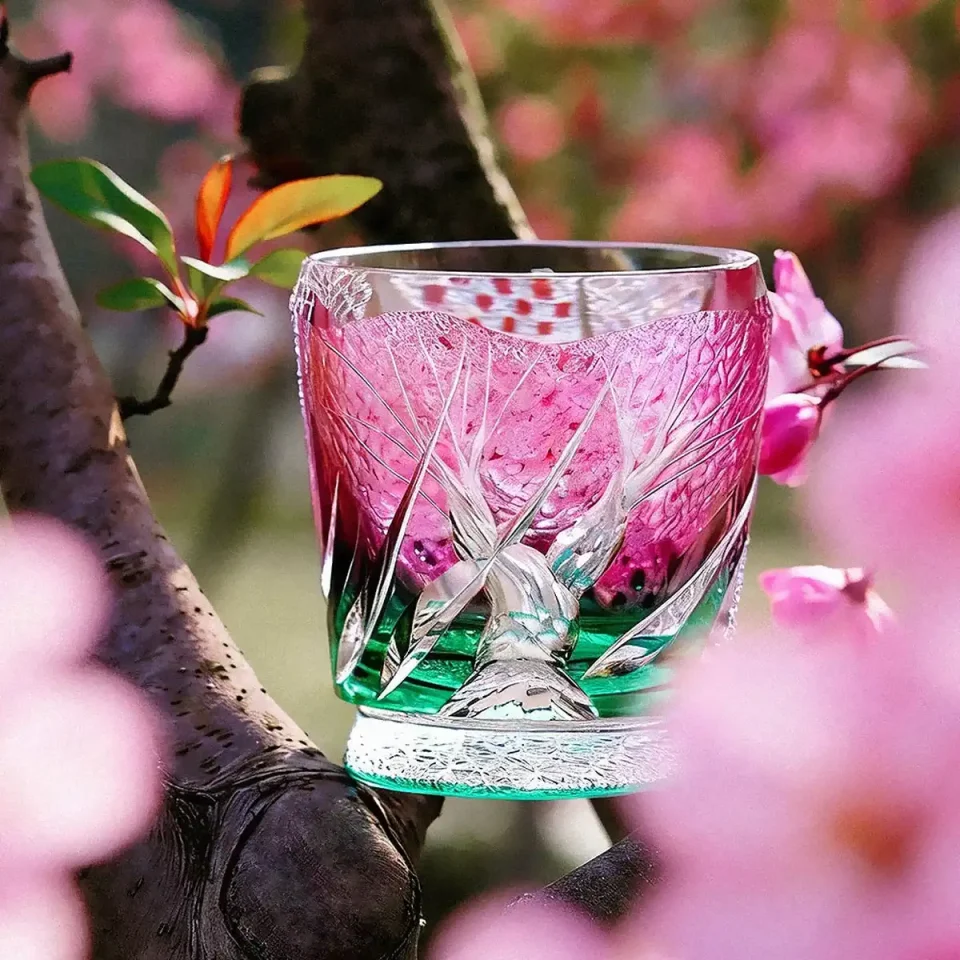
We build Cristamor glasses around exactly this fit-for-purpose idea — no miracle claims. Our hand-cut crystal whiskey and rocks glasses are made for the way people actually drink: narrow-rim profiles that respect the aroma science above, cut from lead-free crystal with weight you can feel, finished by hand so the rim that meets your nose is smooth and precise.
If you’re building a small home tasting setup, start with our guide to whiskey glass types for bourbon, scotch, rye and more — it maps each style to the pour it serves best. And if you want the deeper version of today’s topic, why whiskey glass shape matters walks through the same physics with more detail on nosing, burn, and flavor.
Ready to taste the difference a shape makes? Explore the Cristamor Signature collection and pick the glass that matches how you drink — neat, on the rocks, or somewhere gloriously in between.
The Takeaway
Does a whiskey glass change the aroma? The mechanism is real: shape governs how vapor concentrates and how much ethanol reaches your nose, and narrow-rim tasting glasses exploit that honestly. The skeptics are right about the limits — a glass won’t fix bad whiskey, and if you never nose your pours, the benefit is mostly theoretical. But for anyone who actually stops to smell their whiskey, the right shape delivers more aroma and less burn, pour after pour. Choose the glass for the drink in your hand, and let physics do the rest.