
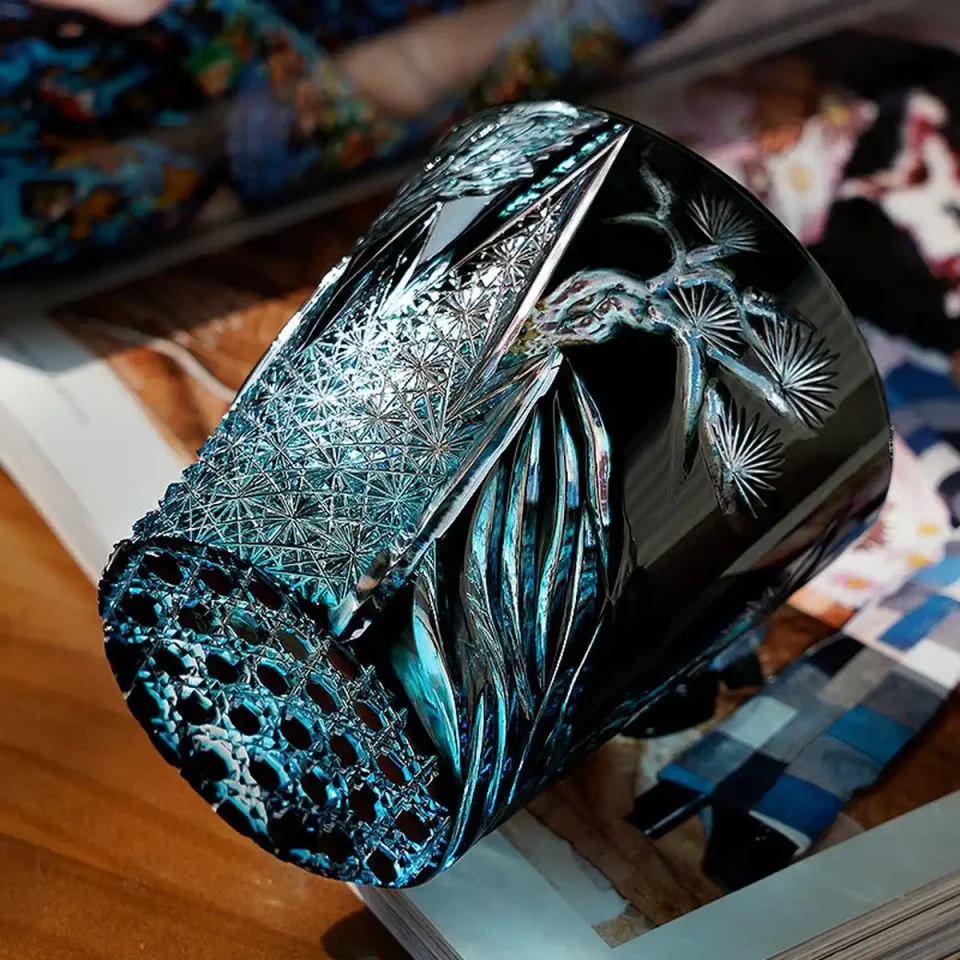
Crystal decanters have a reputation problem, and it has a name: lead. If you’ve recently learned that traditional lead crystal can leach lead into alcohol, you’re probably looking at your decanter — or a gift you were about to buy — with new suspicion. This guide separates what the research actually says from retail reassurance, gives you a simple serving-vs-storage rule, and shows how to verify a decanter is genuinely lead-free.
Why buyers are asking: what the leaching research found
The concern isn’t internet folklore — it traces to real chemistry. McGill University’s Office for Science and Society has warned against storing alcohol in lead crystal, citing testing that found lead levels in wine stored in lead crystal reaching 20,000+ mcg/L after long storage. Other reported testing found roughly 1,000 mcg/L after just two days. Community spaces like r/whisky regularly host the same debate: is a quick pour dangerous, or only long storage?
The demand for answers is visible in search behavior: “is lead crystal safe” draws around 1,300 searches a month, “lead free crystal decanter” about 480, and “lead free whiskey decanter” another 140. Buyers are actively looking for the safety line — and too often getting marketing copy instead of science.
The rule that resolves most of the anxiety: serving vs storage
The practical distinction the evidence supports is simple:
- Serving — whiskey spends minutes to hours in the decanter. The leaching that worries researchers is a storage-time phenomenon; short contact is a different risk category entirely, which is exactly why community consensus (and most safety guidance) treats occasional serving as the normal use case.
- Storage — whiskey sitting in a decanter for weeks or months is where reported leaching figures climb. The 1,000-2,000+ mcg/L readings in published tests are storage-time stories, not dinner-table stories.
So if you own a heirloom lead crystal decanter: decant at the table, return the whiskey to its bottle afterward. That single habit removes most of the concern the research describes.
How to tell if a decanter is actually lead-free
Labeling is the first check: credible makers state the material. Beyond the label:
- Stated composition — look for “lead-free crystal” with the material named, not just the word “crystal”. Our K9 crystal vs lead-free crystal guide breaks down what the terms mean.
- Weight and ring — traditional lead crystal is heavier and rings longer; lead-free pieces feel and sound different. These are hints, not proofs — the label is the proof.
- Seller transparency — if a listing can’t say what the decanter is made of, that silence answers your question.
For a full walkthrough of decanter construction and packaging quality, see our lead-free crystal decanter buying guide.
Why Cristamor skipped the lead question entirely
Cristamor’s decanters and whiskey glasses are made from lead-free crystal — stated openly on every listing, not buried in fine print. The same verification standard we recommend for buyers is the standard the brand holds itself to: named materials, real cut-crystal craft, gift-ready packaging, and tracked delivery with a free-replacement guarantee. You shouldn’t have to choose between beauty and the safety question; material transparency lets you skip the anxiety and enjoy the pour. And if you’re weighing one premium piece against a bigger set, our premium vs budget comparison applies the same material-first logic.
The takeaway
The research gives you two clean rules: never use lead crystal for long-term storage, and buy lead-free when a decanter will hold whiskey more than an evening. Check the stated material before you check the price — “is lead crystal safe” is a 1,300-searches-a-month question precisely because it matters. Buy from makers who answer it in writing, decant for the table rather than the decade, and the lead question stays answered.