
Standing in front of a wall of whiskey glasses is genuinely overwhelming. One testing team at Serious Eats put a number on it: a quick Amazon search for rocks glasses alone returns over 3,000 results. And the people who write about whiskey for a living can’t even agree on the answer — some swear by tulip-shaped tasting glasses, others by the humble tumbler.
So what should a beginner actually buy? This guide gives you an honest, no-jargon answer: what each style of glass actually does, what independent guides and whiskey communities consistently recommend, and how to pick a first glass you’ll still love years from now.
The Short Answer: Two Glasses Cover Everything
Almost every disagreement about whiskey glasses dissolves once you understand that there are really just two jobs:
- Tasting deliberately? You want a tulip-shaped aroma glass (Glencairn-style). The narrow rim concentrates aromas so you can actually smell what you’re drinking.
- Drinking casually? You want a tumbler — the sturdy, wide-mouthed rocks glass that works with ice, a splash of water, or an old fashioned.
Whiskey communities repeat this split constantly. As one r/whiskey commenter put it: “Glencairn for fine tasting, tumbler for sipping.” If you only remember one line from this guide, that’s the one.
Why This Question Confuses Beginners
Three honest reasons:
- The experts genuinely split into two camps. Liquor.com’s expert roundup notes that “many preach that the tulip-shaped copita glass is ideal for presenting the spirits’ aromas and flavors” while “others prefer a classic Old Fashioned or rocks glass for sipping whiskey.” Both are legitimate.
- There are no official rules. Fred Noe of the Jim Beam family puts it simply: “There are no set rules, but I like to enjoy mine in a nice rocks glass with a few cubes of ice or with a little water, too.” If a Jim Beam legend drinks from a tumbler, no beginner needs to feel gatekept.
- The market is flooded. Beyond the thousands of listings, the choice is paralyzing because everything claims to be “the best.” It isn’t. Glass shape does one specific job — and that job determines the answer.
The Aroma Glass: What a Tulip Shape Actually Does
A tulip-shaped glass (the Glencairn is the design most guides talk about) curves inward toward the rim. That shape captures and funnels aromas toward your nose — and since most of what we call “taste” is smell, it changes the experience dramatically.
Independent guides are unusually consistent here. One glass guide for newcomers calls the Glencairn “a fantastic first step” for anyone starting their whiskey journey, precisely because the tulip shape “makes it much easier for a newcomer to pick out” individual aromas. Another reviewer-friendly guide names it “the golden standard of whiskey sipping glasses.” A beginner-focused glassware guide scored it 5/5 — “incredibly affordable, immensely useful.” Even the durability-minded community at r/BuyItForLife recommends the Glencairn as “the originator of the design.”
Choose the aroma glass if: you want to learn to taste — detect notes, compare bottles, sip slowly and pay attention. It is the fastest way to train your nose.
The Tumbler: The Underrated Beginner Choice
The tumbler doesn’t concentrate aroma — that’s the point. It gives you room for ice, water, a whiskey cocktail, and a comfortable grip. Most beginners, honestly, start here: one r/bourbon commenter observed that while you get the most aroma drinking neat from a tulip glass, “most new drinkers prefer to water down their whisky a bit” — and a tumbler is built for exactly that.
Choose the tumbler if: you drink whiskey over ice, mixed, or relaxed at the end of the day. It’s the glass that gets used daily — which matters more than any tasting nuance.
Which One Should You Buy First? A 30-Second Check
- Do you drink whiskey, or study it? Studying → aroma glass. Drinking → tumbler.
- Ice or no ice? Ice drinkers → tumbler, no contest.
- Buying as a gift? Watch how the recipient drinks — or default to a tumbler, the universally safe choice. Our whiskey glass gift-choosing guide covers this in depth.
Budget Default vs. a Glass Worth Keeping
Here’s the honest trade-off most beginner guides skip. The mass-market default glasses are everywhere — the Glencairn alone is stocked by its official store, Amazon, Crate & Barrel, and authorized retailers everywhere — and they’re inexpensive machine-made glass. That’s exactly what makes them a safe first step: low cost, zero risk.
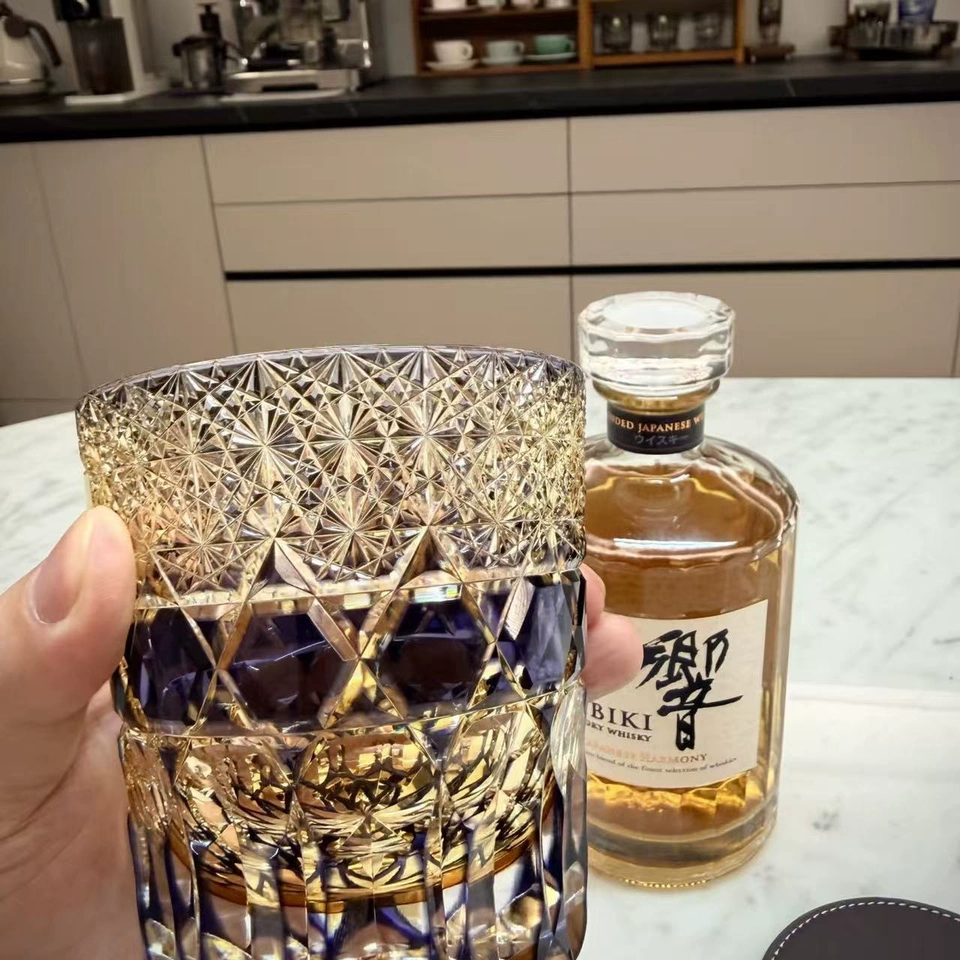
But machine-pressed glass is generic by design. If whiskey has become a ritual rather than a curiosity, the upgrade path is hand-cut crystal: facets cut by hand that catch light, weight that feels intentional, and a presence on the shelf that machine glass never has. If you go that route, learn the difference first — start with how to spot real hand-cut crystal, then understand the material itself in K9 crystal vs. lead-free crystal whiskey glasses and why K9 optical crystal isn’t ordinary glass.
Many beginners do both: an inexpensive tulip glass for focused tasting, and one beautiful tumbler that makes the everyday pour feel earned. A piece like the Clear Prism hand-cut K9 crystal tumbler or the Amber Fuji Wave hand-cut crystal tumbler is built for exactly that second role. Browse the full Cristamor hand-cut crystal collection to see the difference yourself.
The Care Reality Check Nobody Mentions
One more honest note before you buy. Basic machine-made glasses often earn their keep through sheer convenience — one whiskey reviewer kept a tumbler in rotation partly because “I just put the glass in the dishwasher when I was done.” Fine crystal is different: hand-cut pieces deserve hand washing to protect the cut facets and keep them brilliant for decades.
That’s not a downside — it’s a feature of owning something worth caring for. But go in with open eyes: our guides to whether crystal whiskey glasses can go in the dishwasher, cleaning crystal glasses without cloudiness, and complete hand-cut crystal care tell you exactly what to expect.
Frequently Asked Questions
Do I need a special glass to start drinking whiskey?
No — and no honest guide will tell you otherwise. As Jim Beam’s Fred Noe says, there are no set rules. But the right shape makes the hobby more rewarding faster: a tulip glass teaches your nose, a tumbler fits how most people actually drink.
Should my first glass be a Glencairn or a tumbler?
If you’re curious about tasting and comparing whiskeys, start with the Glencairn-style tulip glass — guides consistently call it the ideal beginner’s first step. If you drink over ice or make cocktails, start with a tumbler. When in doubt, the tumbler is the safer everyday pick.
Can one glass do both jobs?
A tumbler is the better single-glass compromise: you can sip neat from it (just with less aroma focus) and it handles ice, water, and cocktails gracefully. A tulip glass can’t do the reverse — ice doesn’t fit well and casual sipping feels awkward.
The Last Wrap
The best whiskey glass for a beginner isn’t a model — it’s a match for how you drink. Learn to taste with a tulip glass; live with a tumbler. Start inexpensive if you’re unsure, and when whiskey becomes a ritual, upgrade the everyday glass to something hand-cut and worth keeping.
Ready for that upgrade? Explore the Cristamor hand-cut crystal whiskey glasses — lead-free K9 optical crystal, cut by hand, built to be the glass you keep.