
The giant clear orb sitting in a rocks glass has become shorthand for serious whiskey service. It looks great in photos — but the ice sphere argument is actually about geometry and dilution, not looks. Here is the honest version: what the physics supports, where the marketing overreaches, and when a sphere genuinely earns its place in your glass.
The Physics: Why a Sphere Melts Slower
A sphere is the shape with the lowest surface area for its volume — no corners, no edges. That matters because ice melts from its surface: more surface touching your whiskey means faster melting and faster dilution. Independent guides converge on the same explanation — a sphere’s minimal surface area melts slower and dilutes your pour at a more controlled rate, keeping the drink cold and stable instead of letting it drift toward whiskey-flavored water. Liquid also flows smoothly around a sphere rather than grinding over sharp edges, which is part of why large-format ice in general outlasts the small cubes from a home freezer tray.
The Quantified Comparisons — Handle With Care
Numbers make these arguments feel scientific, so read them carefully. One detailed guide calculates that around twenty small freezer cubes present roughly three times the surface area of a single 2.5-inch sphere — a directional illustration that matches the geometry. But you will also meet confident percentages in vendor-published content, like claims that a square cube dilutes a drink “15–20% faster” than a sphere. We will not repeat those figures as fact: they come from sellers of ice molds, not independent research. The safe summary is the one everyone agrees on — bigger, rounder ice melts slower; the precise percentages are marketing until proven otherwise.
The Honest Limits Nobody Sells You
- The difference can be subtle. Whiskey communities enjoy the ritual, but even mainstream product reviewers admit many drinkers will not notice a taste difference between one large cube and one sphere. Buy the sphere for the slow pour, not for a flavor transformation.
- Thermal shock is real. Pouring room-temperature whiskey over a just-unmolded sphere can crack it — let the sphere sit a moment first.
- It is still dilution. A sphere melts slower; it does not melt never. If you dislike any water in your whiskey, the answer is no ice, not fancier ice.
When a Sphere Actually Makes Sense
Community experience points to the sweet spot: Old Fashioneds and other rocks cocktails, high-proof bourbons and cask-strength pours you want to open up slowly, and long evening drinks where slow dilution is part of the pleasure. If your habit is two fingers, neat, finished in ten minutes — the sphere buys you presentation, not much else, and that is a perfectly honest reason to use one too.
The Glass Matters More Than the Ice
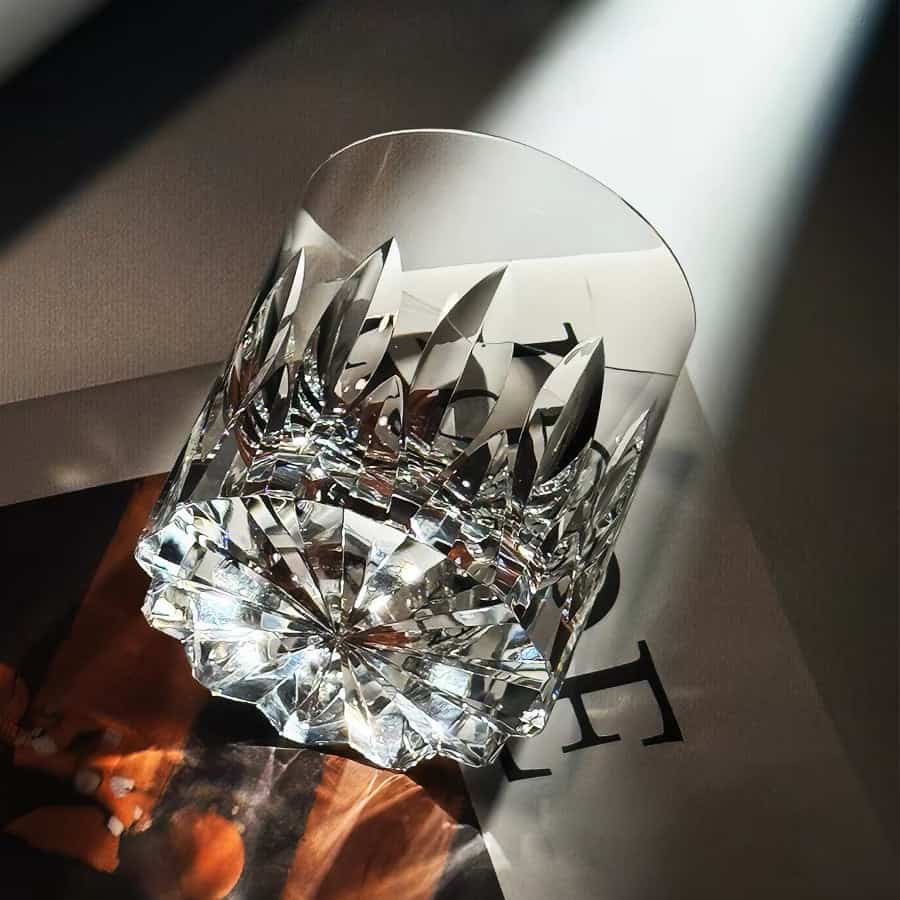
Here is the part the ice-sphere conversation misses: a melting sphere is only as good as the vessel holding it. A thin novelty tumbler shows cracks in temperature retention and feel long before the ice shows its quality. A proper hand-cut lead-free crystal tumbler — weighty base, cut facets, real clarity — is what turns a big ice sphere from a party trick into a serving ritual. Our guides on how to spot real hand-cut crystal and why your whiskey glass matters cover what to look for.
The Practical Takeaway
Use a sphere when the pour is slow and strong; skip it when you drink neat and fast; and put it in glass that deserves it. Browse Cristamor’s hand-cut crystal whiskey glass or the full hand-cut collection to see the vessel side of the pairing, and read our rocks vs tasting glass decision guide plus the bourbon glass gift guide for the complete setup — more practical guides live on the Cristamor blog.
The verdict in one line: an ice sphere is slow-dilution engineering wrapped in presentation — worth it for strong, unhurried pours, honest about its limits, and at its best inside a hand-cut lead-free crystal tumbler.