
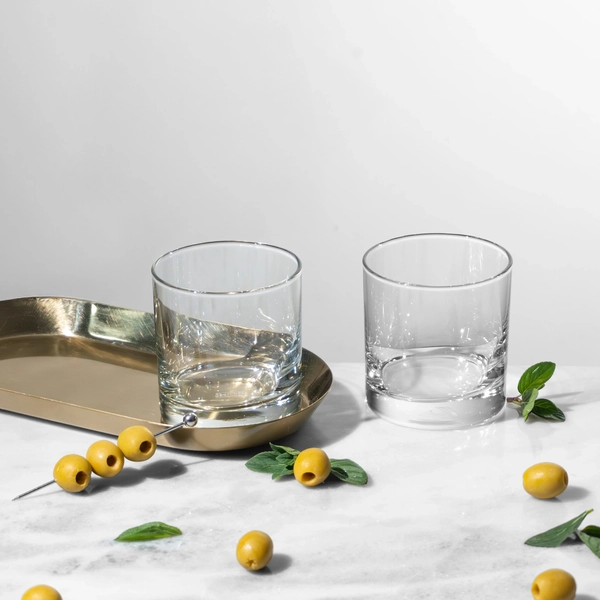
If you have ever stood in front of a whiskey shelf wondering whether to buy a heavy rocks glass, a stemless tasting glass, or both — you are asking one of the most common questions in whiskey gear. And the honest answer, echoed by virtually every independent comparison guide published between 2024 and 2026, is that neither glass wins universally. They are built for different jobs. This guide gives you a practical decision framework: what each glass actually does, the tradeoff that comparison headlines rarely mention, and when a two-glass setup is the right call.
Why “Which Is Better” Has No Universal Answer
Head-to-head guides from specialty glassmakers and whiskey educators have converged on the same verdict: both, for different jobs. Rocks glasses are the everyday workhorse for ice and cocktails; narrow-rim tasting glasses (the Glencairn-style shape is the best-known example) are the tool for neat pours and aroma study. Whiskey communities are equally split in lived experience: some drinkers say a narrow rim delivers stronger aroma, while others point out that the same concentration also amplifies the smell of alcohol itself. The point is not to pick a winner — it is to match the glass to the drink and the moment.
What a Rocks Glass Does Best
- Ice and spirit-forward cocktails. A wide bowl and thick base hold large cubes and give an Old Fashioned room to breathe and build.
- Casual, everyday sipping. It is sturdy, comfortable, and forgiving — the glass most people reach for without thinking.
- Gifting with presence. A hand-cut crystal rocks tumbler has weight and visible craft that make it feel like an object, not just a vessel.
Gift retailers segment buyers exactly this way: the cocktail enthusiast who wants a sturdy rocks set, and the analytical aficionado who wants a proper tasting glass. Knowing which type you are buying for is half the decision.
What a Tasting Glass Does Best
A narrow-rim tasting glass does one thing remarkably well: it focuses aroma. Nosing-oriented reviews explain the mechanics — a wide tumbler lets delicate aroma compounds (esters, phenols, aldehydes) drift out into the room before they ever reach your nose, while a narrowed aperture funnels what is left upward toward it. If you drink whiskey neat and care about vanilla, oak, fruit and grain detail, that concentration is the entire value proposition.
The Honest Tradeoff Nobody Puts in the Headline
Here is the part most comparison guides soften: concentration is a two-way street. The same narrow rim that amplifies oak and caramel also amplifies ethanol — some drinkers find a tightly focused nosing glass makes the alcohol burn more noticeable, not less. This is why the community verdict is genuinely split, and why “upgrade everything to a tasting glass” is bad advice. A rocks glass is not a lesser tool; it is a differently shaped one.
A Word on “Up to 40% Better Aroma” Claims
You will encounter confident numbers in vendor-published content — claims like tulip-shaped bowls improving scent detection by “up to 40%” over a rocks glass. We will not repeat those numbers as fact: they circulate in marketing copy and product listings, and we found no independent research verifying them. The directional logic (narrower aperture concentrates aroma) is well supported; the precise percentages are not. Treat any specific improvement figure from a glass seller as marketing until proven otherwise — including from us.
A Simple Decision Framework
- You mostly drink on ice or make cocktails → a rocks glass, full stop. A tasting glass adds nothing to an Old Fashioned.
- You drink neat and want to learn what you are tasting → add a narrow-rim tasting glass. This is where it earns its place.
- You do both (most whiskey drinkers) → the honest answer is a two-glass setup: rocks for casual, tasting glass for study pours.
- You are buying a gift → gift guides consistently land on sets of two or four as the sweet spot, and presentation packaging genuinely matters for gift buyers. A matched rocks-and-tasting pair covers both drinking styles in one box.
Why the Two-Glass Setup Is the Mature Answer
Look inside any serious whiskey drinker’s cabinet and you will usually find both shapes. The rocks glass handles Tuesday night; the tasting glass handles Saturday’s single cask. That is also why we designed Cristamor’s hand-cut crystal collection around complementary shapes: a hand-cut rocks tumbler with real weight and cut pattern, and narrow-rim tasting glassware for aroma-focused pours — lead-free crystal throughout, cut by hand rather than pressed from a mold.
Choosing Crystal That Lasts
Whichever shape you choose, material and craftsmanship matter more than branding. Lead-free crystal is safer and clearer than cheap glass; hand-cut facets change how light moves through the drink in a way molded imitations cannot fake. If you want a quick authenticity checklist, see our guide on how to spot real hand-cut crystal, the background on how optical crystal becomes a hand-cut whiskey glass, and our overview of why the right whiskey glass matters.
The Practical Takeaway
Stop asking which glass is “better” and start asking which job you are hiring it for. Ice and cocktails: rocks. Neat pours and aroma: tasting glass. Most cabinets — and most gift boxes — should hold both. Browse Cristamor’s hand-cut crystal whiskey glass to see what a proper two-glass setup looks like, or read our whiskey decanter set buying guide if your setup needs a centerpiece. More guides are always available on the Cristamor blog.
The verdict in one line: a rocks glass is for how whiskey is served, a tasting glass is for how whiskey is studied — and a well-cut pair of both is the only “which is better” answer that survives contact with real life.