
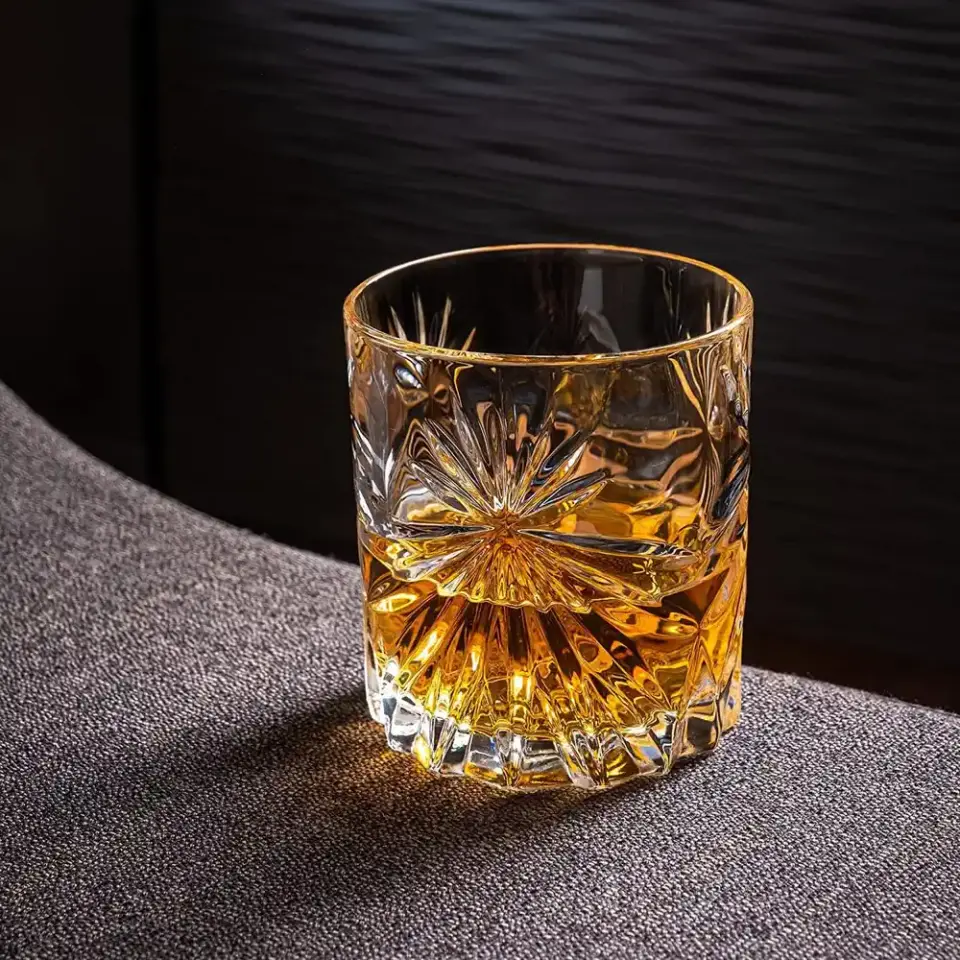
Every whiskey collector eventually faces the same fork in the road: glasses you drink from, and glasses you display. The best collections do both — but building one means cutting through tested-review noise, vintage-market mystery, and a lot of “crystal” labels that don’t mean the same thing twice. Here is a collector’s framework for building a whiskey glassware collection that rings, prisms, and earns its shelf space.
Start With the Two-Glass Core
Collector guides and buying guides alike converge on the same starting point: a tulip-shaped tasting glass for neat pours, and a solid rocks glass for anything on ice or in a cocktail. The tulip format — the Glencairn being the most recognized example — is widely framed as the golden standard of whiskey sipping glasses: a wide bottom and narrow rim that gather aromas toward the nose. The rocks glass covers everything else, and in a collection it should be chosen for cut, weight and clarity, not just capacity.
If your collection starts with one pairing, make it this one. Everything else is a refinement.
Add a Tasting Set for Sensory Depth
Once the core is in place, dedicated whiskey tasting glasses earn their place — copita-style glasses and tulip variants each shape the nosing experience differently, and side-by-side tasting is half the fun of collecting. A matched tasting set also photographs and displays coherently, which matters more to collectors than to casual buyers.
The Decanter Question: Function or Sculpture?
No collector conversation gets further without addressing the decanter. A crystal whiskey decanter set — decanter plus matching glasses, often boxed — is the classic centerpiece purchase, and commerce reflects it: complete sets with glasses remain one of the most-shopped configurations in the category. Three honest considerations before adding one:
- Function: a decanter is primarily a serving and display vessel, not an aging container — whiskey does not improve in glass.
- Display: a well-cut decanter set is the single most shelf-visible piece in the category; premium bundles even arrive with presentation boxes, whiskey stones and matching glassware.
- Material: lead-free crystal is the standard you should insist on for anything you pour from.
Vintage vs Modern: The Lead Crystal Crossroads
Collectors operate in a genuinely active secondary market — dedicated collectible decanter categories on major marketplaces stay freshly stocked with vintage crystal from mid-century American designers, 1970s Portuguese etched glass, and earlier porcelain-capped pieces. Vintage pieces bring provenance and patina that new glass cannot replicate.
But here is the crossroads every collector should think through deliberately: vintage decanters are usually lead crystal; modern premium drinkware is lead-free by design. The practical resolution many collectors land on — and the one we recommend — is vintage for display, modern lead-free for pouring. If you are unsure what a piece is made of, our six-test guide to telling real crystal from cheap glass covers the ring, prism and UV checks — including why lead-free crystal behaves differently from old lead crystal. And for the material trade-offs themselves, the optical vs lead crystal comparison goes deeper on clarity, durability and safety.
What Makes a Piece Collectible
Across editorial roundups, secondary-market listings and gift bundles, the same collectibility markers keep appearing:
- Craft in the cut — hand-cut facets hold crisp lines that molded glass cannot; it is the first thing the ring and prism tests respond to.
- Substantial construction — weight from mineral content, especially a planted, weighted base, reads as quality in the hand and on the shelf.
- Provenance and era — maker, origin and period drive secondary-market interest.
- Complete presentation — original boxes, matched sets and bundles (decanter + glasses + accessories) carry collector value beyond single pieces.
The hand-feel point deserves its own emphasis: heft is not vanity. Our hand-feel anatomy guide explains why a heavy planted sham changes how a glass performs — and how it reads as craft to anyone who picks it up.
Display and Care
A whiskey glass collection lives two lives: in the hand and on the shelf. Display pieces away from direct sunlight to protect any filled contents, keep decanters stoppered, and wash cut crystal by hand — the crisp facet edges that make cut crystal collectible are the same edges that dishwasher abrasion rounds off. For vintage lead-crystal display pieces, decorative display is the safest role; for everyday pouring, lead-free is the standard.
The Collector’s Checklist
- Core first: one tulip tasting glass + one quality rocks glass, in the best cut you can justify.
- Then a matched tasting set for side-by-side nosing.
- Decanter set as the display centerpiece — complete, boxed sets hold collection value best.
- Vintage lead crystal for display; modern lead-free crystal for pouring.
- Verify before you buy: ring, prism, weight and facets — the tests take seconds.
- Hand-wash everything with cut edges.
The Cristamor Collector’s Angle
Cristamor glasses are built for the collecting-and-drinking crowd: hand-cut lead-free crystal with the ring, the prism and the planted-sham heft that collectors look for — without the lead that takes vintage pieces off the pouring roster. If you are assembling a collection as a gift, our premium whiskey gift guide maps gift tiers to occasions. Start or extend your collection in the Cristamor shop — hand-cut lead-free crystal whiskey glasses made to be both displayed and drunk.